This letter from President Lincoln to Major General Ulysses Grant in July 1863 might be the last documented instance of a president apologizing for anything:
My dear General
I do not remember that you and I ever met personally. I write this now as a grateful acknowledgment for the almost inestimable service you have done the country. I wish to say a word further. When you first reached the vicinity of Vicksburg, I thought you should do, what you finally did — march the troops across the neck, run the batteries with the transports, and thus go below; and I never had any faith, except a general hope that you knew better than I, that the Yazoo Pass expedition, and the like, could succeed. When you got below, and took Port-Gibson, Grand Gulf, and vicinity, I thought you should go down the river and join Gen. Banks; and when you turned Northward East of the Big Black, I feared it was a mistake. I now wish to make the personal acknowledgment that you were right, and I was wrong.
Yours very truly
A. Lincoln
After reading Edmund Morris’s trilogy on the life of Theodore Roosevelt I made TR my new favorite president, but I think I have to revert back to Lincoln.
In an interview, Sven Birkerts talks about how serendipity guides his reading:
Any good book will, in the manner of a pool-table bumper, send you angling off to another, and that to another, on and on. The trails are not predictable, they really are serendipitous, but not in the manner of Pandora (“If you liked …”). It’s much stranger than Pandora. Mention of a name in John Berger sends you to some art critic who sends you to the letters of so-and-so, who you find out was mesmerized by X. … You do this for years and it creates this referential network. …
And it never stops, because you really are never done with any worthy writer, you can’t cross him or her off the list. How many times has some writer sent me back to the same essay by, say, Emerson. Each time it’s like “I’ve never read this before.”
Discovery is half the fun of reading. So many books, movies, albums, apps, whatever, I’ve encountered because some other book or tweet or interview or review mentioned something that piqued my interest and sent me pinballing somewhere else.
So, did it meet my expectations? Definitely. I can’t believe writer-director Ryan Coogler is only 31, and that Michael B. Jordan (also 31) has been in so many great roles already.
I couldn’t help noticing the similarities to Wonder Woman. Hotly anticipated origin stories of beloved but neglected characters, both featuring hidden utopias, badass bands of female warriors, and powerful but conflicted scion-heroes at first uncomfortable with their power and soon disillusioned by unveiled secrets.
And like Wonder Woman, I think the critical hype got just a little too far ahead of the final product. But here are a few things that stood out:
Editing. For a long time I’ve pined for an action movie that doesn’t resort to filming an action scene in jump-cut shaky-cam chaos. This one still does, especially in the final act, but the casino fight scene early on is a thing of beauty. Seemingly in one take, the camera flows through the action steadily and lets us behold the combat as if we were there. More of this please!
Music. I’m thankful it’s not just more Superhero Action orchestral noise, but a creative mix of hip-hop, African-style percussion, and vocal flourishes.
Cast. The bland Martin Freeman aside, they got a crazy-good cast here, with Letitia Wright, Andy Serkis, and Michael B. Jordan providing most of the energy and charisma. And though I think he’s perfectly fine here as T’Challa/Black Panther, surely Chadwick Boseman isn’t the only black actor available for the Black Male Icon roles. Jackie Robinson, James Brown, and Thurgood Marshall weren’t enough?
I saw it Sunday morning of opening weekend. We got to the theater a little before showtime and the lines at the box office were crazy long. Quickly found out that our desired showing was sold out, and the next one was in 3D. The last 3D movie I saw was Avatar, which was cool I guess, but the 3D was kinda dark and blurry from what I remember.
Not the case with Black Panther. The image was crisp and bright, and the wide shots had a cool miniaturized look (not sure if this is common to 3D movies or not). Regardless, I was happy to donate the surcharge to help its monster opening weekend.
In a speech given right after September 11, Wendell Berry kept his focus on the long-term concerns of a society and the principles of a proper education:
The complexity of our present trouble suggests as never before that we need to change our present concept of education. Education is not properly an industry, and its proper use is not to serve industries, either by job-training or by industry-subsidized research. Its proper use is to enable citizens to live lives that are economically, politically, socially, and culturally responsible. This cannot be done by gathering or “accessing” what we now call “information” – which is to say facts without context and therefore without priority. A proper education enables young people to put their lives in order, which means knowing what things are more important than other things; it means putting first things first.
Trump is either hiding something so threatening to himself, or he’s criminally incompetent to be commander in chief. It is impossible yet to say which explanation for his behavior is true, but it seems highly likely that one of these scenarios explains Trump’s refusal to respond to Russia’s direct attack on our system — a quiescence that is simply unprecedented for any U.S. president in history. Russia is not our friend. It has acted in a hostile manner. And Trump keeps ignoring it all.
Trump’s Razor: when presented with competing hypothetical answers to the question of Trump’s behavior, one should select the one that makes the fewest assumptions.
Which means: Once you realize the possibility that Trump is deeply compromised, his behavior makes so much more sense.
And this, for me, is the root of our present crisis. Beneath the “America First” president totally uninterested in defending America’s democratic integrity, the businessman running a chaotic and vapid administration, the “deal maker” with no poker face whatsoever, the demagogue with no ideology but himself—beneath all that is a man in a (presently) invisible prison of his own making. Who also happens to be president of the United States.
Eimantas Paškonis made a beautiful new font based on the manuscript of the Act of Independence of Lithuania, passed in 1918:
The whole project took more than 6 months. First of all, a high-resolution scan of the Act of Independence of Lithuania had to be obtained from the Ministry of Foreign Affairs. Then the person who wrote the Act had to be identified because some characters were missing in the resolution of February the 16th. When the handwriting was established as Jurgis Šaulys’s, the missing characters were created according to other documents written by J. Šaulys and found in the archives. It took a highly skilled typographer over 120 hours to construct the font.
Previously under Russian rule, Lithuania was occupied by the German Empire during the First World War. It used the distraction of the war as another bid for independence, which Germany surprisingly agreed to with hopes Lithuania would “detach itself from Russia and establish a closer relationship with Germany.”
Indeed, they went for full independence, adopting a resolution “that an independent Lithuania should be established and that a closer relationship with Germany would be conditional on Germany’s formal recognition of the new state.”
Humans are not hunter-gatherers anymore, but we were for a long time. Nicholas Bate has a list of 50 skills we collectively gained from that era can go to waste in our modern existence, unless we realize how useful they still are. I like the list because it combines small practicalities with big-picture stuff. For example:
Tell stories that fire the imagination.
Use eyes for distances beyond the screen: look long, look up.
Remember what’s important.
Stare at night skies unpolluted by light.
Establish rituals: writing, building & crafting, reflecting
No elevators. No escalators. No PPT. No Facebook after the sun sets.
Be self-reliant: learn how it works, from pensions to mowers.
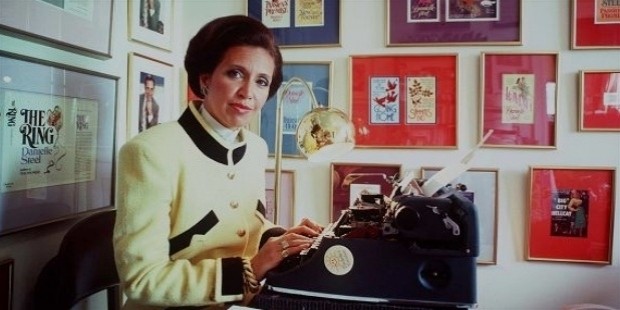
After all these years, Steel continues to use the same 1946 Olympia typewriter she bought used when working on her first book. “I am utterly, totally and faithfully in love with my typewriter,” she says. “I think I paid $20 for it. Excellent investment! And by now, we’re old friends.”
Above all, my old iPad has revealed itself as a cursed object of a modern sort. It wears out without wearing. It breaks down without breaking. And it will be left for dead before it dies.
A machine that’s over 70 years old (!) is still performing exactly as it did the year after World War II ended, and another machine that’s not even 7 years old is now a digital dotard. An iPad of course can do far more things than a typewriter. But if it can only do those things for the length of two presidential terms, tops, is it truly worth the investment?
My 1970 Hermes 3000 originally sold for $129.50, according to the sticker still on its body. That’s about $845 in 2017 dollars, which would get you an iPad Pro or basic laptop today. I bought it last year for $30 at an antique store. It’s in seemingly mint condition all these years later, and I can’t wait to see what words it will produce—from me and any future owners. If the iPad’s “slow death” takes place after only a few years, the death of this Hermes—perish the thought—will be downright glacial.
Yet what Herrman concludes about a tablet is also true of a typewriter: “It will still be a wonder of industrial design and a technological marvel, right up until the moment it is destroyed for scrap.”
A stately British bookseller and an American writer exchange letters across the pond? Sounds like a cozy English romance novel to me. Turns out 84, Charing Cross Road is neither a novel nor a romance, but a collection of actual letters from over 20 years of correspondence, and it’s delightful.
Frank Doel, one of the booksellers at the rare book store at the titular address in London, is the straight man in this epistolary relationship. This allows Helene Hanff, a Brooklyn screenwriter and lover of British literature, to sparkle with personality. You get a pretty good sense of what Hanff was like right away. It doesn’t take long for her to playfully badger Doel, a man she’d never met, about a book she requested:
Frank Doel, what are you DOING over there, you are not doing ANYthing, you are just sitting AROUND. .. Well, don’t just sit there! Go find it! i swear i dont know how that shop keeps going.
And:
what do you do with yourself all day, sit in the back of the store and read? why don’t you try selling a book to somebody?
— MISS Hanff to you. (I’m helene only to my FRIENDS)
Their letters also place them in the specific historical moment of postwar England where rationing made basics like meat and jam luxuries:
I send you greetings from America—faithless friend that she is, pouring millions into rebuilding Japan and Germany while letting England starve. Some day, God willing, I’ll get over there and apologize personally for my country’s sins (and by the time i come home my country will certainly have to apologize for mine).
She’s also clearly a bibliophile. When the bookstore employees send her a book and a note with their signatures as a Christmas gift, she admonishes them for writing the note on a separate card rather than in the book itself:
I love inscriptions on flyleaves and notes in margins, I like the comradely sense of turning pages someone else turned, and reading passages some one long gone has called my attention to.
And yet, she’s not precious about them:
My friends are peculiar about books. They read all the best sellers, they get through them as fast as possible, I think they skip a lot. And they NEVER read anything a second time so they don’t remember a word of it a year later. But they are profoundly shocked to see me drop a book in the wastebasket or give it away. The way they look at it, you buy a book, you read it, you put it on the shelf, you never open it again for the rest of your life but YOU DON’T THROW IT OUT! NOT IF IT HAS A HARD COVER ON IT! Why not? I personally can’t think of anything less sacrosanct than a bad book or even a mediocre book.
I watched the 1987 movie version right after reading the book. It includes pretty much every word from the original letters, so reading the book will give you all you need. Then again, you’d miss out on somesolid typewriter action, as seen above and here, with Hanff played by Anne Bancroft:
Anthony Hopkins, who plays Frank Doel, also gets in on the action with his Underwood:
Refer Madness spotlights strange, intriguing, or otherwise noteworthy questions I encounter at the library reference desk.
Some days on the desk are rough. Challenging patrons, technical difficulties, a case of the Mondays—whatever the issues are, like sneezes and football sacks they often come in bunches to create a day that’s better forgotten.
This was not one of those days.
First, there was a man who said he’d submitted an interlibrary loan request for a movie two months ago, hadn’t heard back, then found out there wasn’t a record of it at all. This is an aggravating situation all around, for patrons who deserve better service and for staff who seek to eliminate mistakes. Such a blunder can make a patron visibly and justifiably frustrated, but this gentleman wasn’t. “If this is the worst thing to happen to me today,” he said, “then I really just have first-world problems.”
Thirty minutes later, a colleague was setting up for a presenter who needed a PowerPoint and projector. Such a routine and simple task that usually goes off without a hitch. Instead, the laptop decides to become possessed and inhabit the projector as well. Murphy’s Law reasserts itself yet again. The speaker could not have been nicer. He spoke to the attendees as we futzed with cables and buttons. “If this is the worst to happen to your day,” he said, “it was probably a great day.”
That really happened: two different people used the same line within a half-hour of each other.
Not ten minutes later, I had to bump a patron from a study room to make room for someone who’d made a reservation. He was a regular and knew the study room policies, but you never know how people will react to getting booted. “I don’t have to go home but I can’t stay here, right?” he said with a smile. It wasn’t quite closing time, but he got the picture.
The next time I am having one of those terrible, horrible, no-good, very bad days on the desk, I’ll remember this hat-trick of good humor and hope to experience it again.
Until about two years ago I knew Scott Adams only as the Dilbert guy. But once he started accurately predicting Donald Trump’s unconventional political path using the lenses of persuasion and hypnotism, gaining critics along the way but scoring on predictions over and over when most everyone else was aghast at Trump’s successes, I figured his new book Win Bigly: Persuasion in a World Where Facts Don’t Matter was worth the read.
Turns out it was worth it, if only for an understanding of some of the concepts undergirding the chaos that Trump inspires. He calls Trump a “Master Persuader” using “weapons-grade” techniques to flummox opponents and win admirers. Whether it’s his constant Twitter attacks—”It tells people that being his friend is better than being his critic,” says Adams—or his bombastic hyperbole about The Wall—being intentionally inaccurate but “directionally” true will win supporters and fluster opponents—Adams detects and explains what he sees as the method behind the madness. (The “Persuasion Tips” peppered throughout the book are applicable far beyond politics.)
He repeatedly claims his interest in this subject stems not from his politics but from his lifelong interest in persuasion techniques. (His other chief interest? Scott Adams.) It seems true to an extent, but Adams loses some of that nonpartisan credibility by the end of the book when he’s openly cheering for a Trump win.
Despite his compelling arguments, I knew there was another key element to the Trump story. I couldn’t pinpoint it until I recalled a passage from Jon Ronson’s excellent bookSo You’ve Been Publicly Shamed, about Max Mosley, a race car driver and son of a prominent British Nazi who was outed by a tabloid for his seemingly Nazi-themed sex party. Ronson’s book is about the people whose lives were upended when their behavior went viral. But Mosley survived his scandal relatively unscathed. Why?
Like me, [Mosley had] been thinking a lot about what it was about him that had helped him to stave off even the most modest public shaming. And now, he wrote, he thought he had the answer. It was simply that he had refused to feel ashamed. “As soon as the victim steps out of the pact by refusing to feel ashamed,” he said, “the whole thing crumbles.”
A-ha, I thought. That’s it: no shame. That’s the key to Trump not only surviving scandal after scandal, but surviving all the way to the presidency. A normal politician running for president probably wouldn’t have lasted long after insulting John McCain’s war record or calling Mexican immigrants rapists. But he thrived.
(This also explains the vociferous #Resistance to all things Trump. He doesn’t conform to the commonly held assumptions about political behavior, so like a new viral strain or zombie he just refuses to (politically) die. That makes him particularly vexing and infuriating as an opponent.)
Adams basically confirms this shame theory: “I don’t feel shame or embarrassment like normal people. I wasn’t always this way. It’s a learned skill.” No wonder he understands Trump so well! Beyond their persuasion prowess, both men are rich New Yorkers with robust egos but no inner filters. Such a skill set helped build the Trump brand in the business world, and it’s now reshaping politics, the presidency, and the world.
Though reliving the 2016 election through this book won’t sound fun for most people, I recommend it. Adams has written a kind of Rosetta Stone for a less examined aspect of The Trumpening, and I think that’s very valuable and illuminating regardless of your political beliefs.
An ongoing series on books, movies & more I’ve encountered recently:
Nurtured By Love by Shinichi Suzuki. Great little book on how to cultivate talent, specifically in children and music but also for anyone in anything.
On Trails: An Exploration by Robert Moor. Enjoyed the adventure of this winding, informative book on the nature of trails of all kinds. Like an erudite sequel to A Walk in the Woods.
The Million Dollar Duck. A documentary that follows 6 artists who enter their drawings into the apparently popular and lucrative annual Federal Duck Stamp design contest. Surprisingly dramatic.
Persepolis. Loved this graphic novel’s high-contrast black and white illustration style. Perfect mix of a girl’s light and funny memoir with the high drama of the Iranian revolution.
Jim & Andy: The Great Beyond. It’s fun to watch Jim Carrey go full Method for Man on the Moon now, from a distance, but it looked like a nightmare for everyone else at the time. The Truman Show remains Carrey’s apex.
High Society. Great sick-day movie: Grace Kelly (in her final role) with a lot to do, Bing Crosby and Frank Sinatra quippin’ and singin’ around a mansion, plus a superfluous but lovely Louis Armstrong performance, in a funny and charming Philadelphia Story/Casablanca rehash that gives everyone a chance to shine. Hard to believe Kelly was only 26 when she retired from acting.
Phantom Thread. I realized pretty quickly this was a dark comedy, which helped me enjoy it in the moment. But not as much as everyone else seems to enjoy it. Pretty sure I was the only one laughing in my screening.
Ingrid Goes West. Taylor’s beefcake, possibly sociopathic bro holding valuable information hostage is the perfect metaphor for Silicon Valley right now, as is this movie overall.
Moonstruck. Can confirm that the conventional wisdom about this movie—”Nicholas Cage and Cher together in a rom-dramedy that strangely works well”—is correct.
I’m better at some of these than others. I think about #6 a lot because it’s so easy to do, and I think about #5 a lot because, for me at least, it’s so hard to do.
Additionally, WSJ’s “Save Yourself From Tedious Small Talk” offers some conversation-openers that spark pleasure and deeper thinking beyond today’s weather and the traffic you hit on your way here:
Have you been working on anything exciting recently?
It’s a meaningful movie for me, coming out when I was in high school and a drummer in a rock band. Our guitarist/singer even had the same Gibson SG guitar that Jack Black’s Dewey uses.
At first, we’re meant to see Dewey as a delusional has-been, if a true believer in rock music’s ability to “change the world.” But in his new role as accidental teacher and musical mentor to a class of talented prep school kids, he finds a positive outlet for his enthusiastic idealism (if under shady circumstances). And his maxims about what rock is really about become sound wisdom for impressionable minds rather than just eye rolling platitudes.
This is evident in the scene where the band comes together to make something new together in Zach’s song. Not only does it capture the excitement of “creating musical fusion” with bandmates, but the smile that emerges on Dewey’s face as he steps back to watch the kids come into their own as musicians is a testament to the joy of creative potential being realized.
There are several laugh-out-loud moments throughout, not even counting the “I have been touched by your kids” scene. You really have to be a Jack Black fan to enjoy most of them, if not the whole movie. But even if you aren’t, I can’t see how he wouldn’t win you over with his relentless, goofy energy and legit talent.
A pox upon me for never having read Ursula Le Guin before she died last week. I’ll get right on that, as her reputation is high among many different kinds of readers.
Before diving into her novels, though, I encountered her blog (an 88 year old blogging!) on which last year she posted “Constructing the Golem”, pretty thoroughly diagnosing our political moment and offering advice for overcoming it:
When he does something weird (which he does constantly in order to keep media attention on him), look not at him but at the people whom his irresponsible acts or words affect — the Republicans who try to collaborate with him (like collaborating with a loose cannon), the Democrats and Government employees he bullies, the statesmen from friendly countries he offends, the ordinary people he uses, insults, and hurts. Look away from him, and at the people who are working desperately to save what they can save of our Republic and our hope of avoiding nuclear catastrophe. Look away from him, and at reality, and things begin to get back into proportion.
He is entirely a creature of the media. He is a media golem. If you take the camera and mike off him, if you take your attention off him, nothing is left — mud.
Oh, would that it were so simple. He is the president, and the office of the presidency is unable to be ignored no matter who occupies its office. This is the present conundrum.
Nicholas Carr, incisive as always, speaks to this in an essay at Politico. He first zooms in on the president’s Twitter addiction:
Thanks to Twitter, the national conversation is now yoked to the vagaries of Trump’s mind. Politics has been subsumed by psychology. Twitter’s formal qualities as an informational medium—its immediacy and ephemerality, its vast reach, its lack of filters—mirror and reinforce the impulsiveness, solipsism, and grandiosity that define Trump’s personality and presidency and, by extension, the times. Banal yet mesmerizing, the president’s Twitter stream distills our strange cultural moment—the moment the noise became the signal.
…and then zooms out on its larger implications:
It’s not much of an exaggeration to say that the nation and its institutions have become a sort of drug-delivery system engineered to feed the compulsions of a single, unusual man. And given what we know about the way media technologies shape society, a bigger question looms: Are we stuck here for good?
Dear lord I hope not.
A president’s pronouncements will always be news, but they don’t have to grab headlines the way Trump’s tweets routinely do. The messages’ enduring power to seize attention and shape debate springs from a deeper source. It reflects the polarized state of the country and its politics. Among both the president’s fans and his foes, the tweets provoke extreme reactions, which serve to reinforce each side’s confidence in the righteousness of its cause. We listen so intently to Trump’s tweets because they tell us what we want to hear about the political brand we’ve chosen. In a perverse way, they serve as the rallying cries of two opposed and warring tribes.
And when you’re stuck between these two warring tribes, you don’t even get to enjoy the psychological benefits from tribalism. You just witness the carnage and wonder which side you’d rather see lose.
School of Rock was a formative movie for me. It came out when I was in high school and a drummer in a rock band. I still think of it first when I hear “The Immigrant Song” by Led Zeppelin. (Thor: Ragnarok second.)
Digging around my library’s local history collection, I found a stack of trifold brochures promoting the services of the old North Suburban Library System (now RAILS) my library is part of. I’m guessing they’re from the 1970s since NSLS started in the late ’60s. Look at all these groovy logos and colors:
And then there’s the one that summarizes all the services:
All reference desks should have a “Just Ask” sign on them to encourage shy patrons. Maybe I’ll turn it into a button.
I’d love to talk to whoever designed these. Were the icons specially made for these brochures or did they come from somewhere else? Perhaps they could be repurposed for a digital marketing campaign, or at least a cool collage project.
I’m in the midst of Robert Moor’s fascinating On Trails: An Exploration, and he mentions desire lines. Defined as paths “created as a consequence of erosion caused by human or animal traffic,” they are usually a shortcut through grass that’s a more direct line between two points.
“They can be found in the parks of every major city on earth,” Moor writes, including those of repressive authoritarian regimes, where dictatorial architects despise them as “geographic graffiti” because they belie the “authoritarian failure to predict our needs and our desires.” Efforts to remove or impede desire lines are almost always fruitless: “Wise designers sculpt with desire, not against it.”
Once you realize what a desire path is, you’ll see them everywhere. I love discovering terminology for everyday phenomena that I didn’t realize actually had a name. Here are a few more I like:
Slip lane: The diagonal lane at an intersection that allows you to turn right at an intersection without entering it.
Rumble bars(aka drunk bumps, growlers, drift lines): The slotted lines on highway shoulders that cause your tires to rumble when you drive over them.
Road verge(aka curb lawn, devil strip, easement, parkway, and many more): the strip of grass between the sidewalk and the road.
They are specific but simply worded, almost onomatopoeic in how they describe common but often invisible design. Can’t wait to add more to this list. Any suggestions?