• How to ‘Win Bigly’? Have no shame

    Until about two years ago I knew Scott Adams only as the Dilbert guy. But once he started accurately predicting Donald Trump’s unconventional political path using the lenses of persuasion and hypnotism, gaining critics along the way but scoring on predictions over and over when most everyone else was aghast at Trump’s successes, I figured his new book Win Bigly: Persuasion in a World Where Facts Don’t Matter was worth the read.

    Turns out it was worth it, if only for an understanding of some of the concepts undergirding the chaos that Trump inspires. He calls Trump a “Master Persuader” using “weapons-grade” techniques to flummox opponents and win admirers. Whether it’s his constant Twitter attacks—”It tells people that being his friend is better than being his critic,” says Adams—or his bombastic hyperbole about The Wall—being intentionally inaccurate but “directionally” true will win supporters and fluster opponents—Adams detects and explains what he sees as the method behind the madness. (The “Persuasion Tips” peppered throughout the book are applicable far beyond politics.)

    He repeatedly claims his interest in this subject stems not from his politics but from his lifelong interest in persuasion techniques. (His other chief interest? Scott Adams.) It seems true to an extent, but Adams loses some of that nonpartisan credibility by the end of the book when he’s openly cheering for a Trump win.

    Despite his compelling arguments, I knew there was another key element to the Trump story. I couldn’t pinpoint it until I recalled a passage from Jon Ronson’s excellent book So You’ve Been Publicly Shamed, about Max Mosley, a race car driver and son of a prominent British Nazi who was outed by a tabloid for his seemingly Nazi-themed sex party. Ronson’s book is about the people whose lives were upended when their behavior went viral. But Mosley survived his scandal relatively unscathed. Why?

    Like me, [Mosley had] been thinking a lot about what it was about him that had helped him to stave off even the most modest public shaming. And now, he wrote, he thought he had the answer. It was simply that he had refused to feel ashamed. “As soon as the victim steps out of the pact by refusing to feel ashamed,” he said, “the whole thing crumbles.”

    A-ha, I thought. That’s it: no shame. That’s the key to Trump not only surviving scandal after scandal, but surviving all the way to the presidency. A normal politician running for president probably wouldn’t have lasted long after insulting John McCain’s war record or calling Mexican immigrants rapists. But he thrived.

    (This also explains the vociferous #Resistance to all things Trump. He doesn’t conform to the commonly held assumptions about political behavior, so like a new viral strain or zombie he just refuses to (politically) die. That makes him particularly vexing and infuriating as an opponent.)

    Adams basically confirms this shame theory: “I don’t feel shame or embarrassment like normal people. I wasn’t always this way. It’s a learned skill.” No wonder he understands Trump so well! Beyond their persuasion prowess, both men are rich New Yorkers with robust egos but no inner filters. Such a skill set helped build the Trump brand in the business world, and it’s now reshaping politics, the presidency, and the world.

    Though reliving the 2016 election through this book won’t sound fun for most people, I recommend it. Adams has written a kind of Rosetta Stone for a less examined aspect of The Trumpening, and I think that’s very valuable and illuminating regardless of your political beliefs.

    See my full notes from the book.


  • Media of the moment

    An ongoing series on books, movies & more I’ve encountered recently:

    Nurtured By Love by Shinichi Suzuki. Great little book on how to cultivate talent, specifically in children and music but also for anyone in anything.

    On Trails: An Exploration by Robert Moor. Enjoyed the adventure of this winding, informative book on the nature of trails of all kinds. Like an erudite sequel to A Walk in the Woods.

    The Million Dollar Duck. A documentary that follows 6 artists who enter their drawings into the apparently popular and lucrative annual Federal Duck Stamp design contest. Surprisingly dramatic.

    Persepolis. Loved this graphic novel’s high-contrast black and white illustration style. Perfect mix of a girl’s light and funny memoir with the high drama of the Iranian revolution.

    Jim & Andy: The Great Beyond. It’s fun to watch Jim Carrey go full Method for Man on the Moon now, from a distance, but it looked like a nightmare for everyone else at the time. The Truman Show remains Carrey’s apex.

    High Society. Great sick-day movie: Grace Kelly (in her final role) with a lot to do, Bing Crosby and Frank Sinatra quippin’ and singin’ around a mansion, plus a superfluous but lovely Louis Armstrong performance, in a funny and charming Philadelphia Story/Casablanca rehash that gives everyone a chance to shine. Hard to believe Kelly was only 26 when she retired from acting.

    Phantom Thread. I realized pretty quickly this was a dark comedy, which helped me enjoy it in the moment. But not as much as everyone else seems to enjoy it. Pretty sure I was the only one laughing in my screening.

    Ingrid Goes West. Taylor’s beefcake, possibly sociopathic bro holding valuable information hostage is the perfect metaphor for Silicon Valley right now, as is this movie overall.

    Moonstruck. Can confirm that the conventional wisdom about this movie—”Nicholas Cage and Cher together in a rom-dramedy that strangely works well”—is correct.


  • How to have better conversations

    Via Kottke, here are radio interviewer Celeste Headlee’s 10 tips for better conversations:

    1. Don’t multitask.
    2. Don’t pontificate.
    3. Use open-ended questions.
    4. Go with the flow.
    5. If you don’t know, say that you don’t know.
    6. Don’t equate your experience with theirs.
    7. Try not to repeat yourself.
    8. Stay out of the weeds.
    9. Listen.
    10. Be brief.

    I’m better at some of these than others. I think about #6 a lot because it’s so easy to do, and I think about #5 a lot because, for me at least, it’s so hard to do.

    Additionally, WSJ’s “Save Yourself From Tedious Small Talk” offers some conversation-openers that spark pleasure and deeper thinking beyond today’s weather and the traffic you hit on your way here:

    • Have you been working on anything exciting recently?
    • What was the highlight of your day?
    • Any exciting plans this summer?
    • What do you do to relax?
    • What’s keeping you awake at night?

  • School of Rock

    “We’re not goofing off. We’re creating musical fusion.”

    The video of a guy drumming to the “Just give up” speech from School of Rock inspired me to rewatch that 2003 Richard Linklater film for the first time in a while.

    It’s a meaningful movie for me, coming out when I was in high school and a drummer in a rock band. Our guitarist/singer even had the same Gibson SG guitar that Jack Black’s Dewey uses.

    At first, we’re meant to see Dewey as a delusional has-been, if a true believer in rock music’s ability to “change the world.” But in his new role as accidental teacher and musical mentor to a class of talented prep school kids, he finds a positive outlet for his enthusiastic idealism (if under shady circumstances). And his maxims about what rock is really about become sound wisdom for impressionable minds rather than just eye rolling platitudes.

    This is evident in the scene where the band comes together to make something new together in Zach’s song. Not only does it capture the excitement of “creating musical fusion” with bandmates, but the smile that emerges on Dewey’s face as he steps back to watch the kids come into their own as musicians is a testament to the joy of creative potential being realized.

    There are several laugh-out-loud moments throughout, not even counting the “I have been touched by your kids” scene. You really have to be a Jack Black fan to enjoy most of them, if not the whole movie. But even if you aren’t, I can’t see how he wouldn’t win you over with his relentless, goofy energy and legit talent.


  • Ursula Le Guin on the ‘media golem’

    A pox upon me for never having read Ursula Le Guin before she died last week. I’ll get right on that, as her reputation is high among many different kinds of readers.

    Before diving into her novels, though, I encountered her blog (an 88 year old blogging!) on which last year she posted “Constructing the Golem”, pretty thoroughly diagnosing our political moment and offering advice for overcoming it:

    When he does something weird (which he does constantly in order to keep media attention on him), look not at him but at the people whom his irresponsible acts or words affect — the Republicans who try to collaborate with him (like collaborating with a loose cannon), the Democrats and Government employees he bullies, the statesmen from friendly countries he offends, the ordinary people he uses, insults, and hurts. Look away from him, and at the people who are working desperately to save what they can save of our Republic and our hope of avoiding nuclear catastrophe. Look away from him, and at reality, and things begin to get back into proportion.

    Or: just don’t look.

    He is entirely a creature of the media. He is a media golem. If you take the camera and mike off him, if you take your attention off him, nothing is left — mud.

    Oh, would that it were so simple. He is the president, and the office of the presidency is unable to be ignored no matter who occupies its office. This is the present conundrum.

    Nicholas Carr, incisive as always, speaks to this in an essay at Politico. He first zooms in on the president’s Twitter addiction:

    Thanks to Twitter, the national conversation is now yoked to the vagaries of Trump’s mind. Politics has been subsumed by psychology. Twitter’s formal qualities as an informational medium—its immediacy and ephemerality, its vast reach, its lack of filters—mirror and reinforce the impulsiveness, solipsism, and grandiosity that define Trump’s personality and presidency and, by extension, the times. Banal yet mesmerizing, the president’s Twitter stream distills our strange cultural moment—the moment the noise became the signal.

    …and then zooms out on its larger implications:

    It’s not much of an exaggeration to say that the nation and its institutions have become a sort of drug-delivery system engineered to feed the compulsions of a single, unusual man. And given what we know about the way media technologies shape society, a bigger question looms: Are we stuck here for good?

    Dear lord I hope not.

    A president’s pronouncements will always be news, but they don’t have to grab headlines the way Trump’s tweets routinely do. The messages’ enduring power to seize attention and shape debate springs from a deeper source. It reflects the polarized state of the country and its politics. Among both the president’s fans and his foes, the tweets provoke extreme reactions, which serve to reinforce each side’s confidence in the righteousness of its cause. We listen so intently to Trump’s tweets because they tell us what we want to hear about the political brand we’ve chosen. In a perverse way, they serve as the rallying cries of two opposed and warring tribes.

    And when you’re stuck between these two warring tribes, you don’t even get to enjoy the psychological benefits from tribalism. You just witness the carnage and wonder which side you’d rather see lose.


  • Drumming to Dewey Finn in ‘School of Rock’

    File this under “things I’d never think of but now make perfect sense”: drumming synced to Dewey Finn’s “Just give up” speech in School of Rock.

    Incredible. He has a bunch more too, like Willy Wonka and Fawlty Towers.

    School of Rock was a formative movie for me. It came out when I was in high school and a drummer in a rock band. I still think of it first when I hear “The Immigrant Song” by Led Zeppelin. (Thor: Ragnarok second.)

    See also: the cast’s 10-year reunion show.


  • Films Galore and other groovy ’70s library brochures

    Digging around my library’s local history collection, I found a stack of trifold brochures promoting the services of the old North Suburban Library System (now RAILS) my library is part of. I’m guessing they’re from the 1970s since NSLS started in the late ’60s. Look at all these groovy logos and colors:

    And then there’s the one that summarizes all the services:

    All reference desks should have a “Just Ask” sign on them to encourage shy patrons. Maybe I’ll turn it into a button.

    I’d love to talk to whoever designed these. Were the icons specially made for these brochures or did they come from somewhere else? Perhaps they could be repurposed for a digital marketing campaign, or at least a cool collage project.


  • Desire lines in dictatorships

    I’m in the midst of Robert Moor’s fascinating On Trails: An Exploration, and he mentions desire lines. Defined as paths “created as a consequence of erosion caused by human or animal traffic,” they are usually a shortcut through grass that’s a more direct line between two points.

    “They can be found in the parks of every major city on earth,” Moor writes, including those of repressive authoritarian regimes, where dictatorial architects despise them as “geographic graffiti” because they belie the “authoritarian failure to predict our needs and our desires.” Efforts to remove or impede desire lines are almost always fruitless: “Wise designers sculpt with desire, not against it.”

    Once you realize what a desire path is, you’ll see them everywhere. I love discovering terminology for everyday phenomena that I didn’t realize actually had a name. Here are a few more I like:

    Slip lane: The diagonal lane at an intersection that allows you to turn right at an intersection without entering it.

    Rumble bars (aka drunk bumps, growlers, drift lines): The slotted lines on highway shoulders that cause your tires to rumble when you drive over them.

    Road verge (aka curb lawn, devil strip, easement, parkway, and many more): the strip of grass between the sidewalk and the road.

    They are specific but simply worded, almost onomatopoeic in how they describe common but often invisible design. Can’t wait to add more to this list. Any suggestions?


  • Refer Madness: A Patron Mount Rushmore

    rm

    Refer Madness spotlights strange, intriguing, or otherwise noteworthy questions I encounter at the library reference desk. [Note: this was originally published at Booklist.]

    In the office one day, my colleagues got to discussing who our library’s Mount Rushmore of patrons would be. Not necessarily the nicest ones but the ones who have become iconic among staff largely because of the mystery that surrounds them.

    I thought of a few candidates right away. The man with the quiet, husky voice who calls our small, suburban Illinois library for phone numbers in California. Or the woman who calls looking for information on a website, the same one every time, whose calls are so predictable they could follow a script.

    And then there’s the man who calls occasionally with a request: for us to print out the Google Maps Street View of certain intersections, all four corners of them. Sometimes it’s a specific one, but other times he just names a landmark or a city and will accept any street-view pictures of it.

    He’s also into appraisal. If we’re not on Google Maps for him, we’re looking up the value of certain artifacts and printing screenshots of similar items on eBay. Previous examples include a Star Wars novelty coin, a book about the First Cavalry Division in the Korean War, an 1853 French coin, and a John Lennon and Yoko Ono “Let Them Stay In” button.

    All of this begs so many questions. Where does he get these artifacts? Is he a collector or just trying to make a buck? How amazing is his coin collection? Why the fascination with intersections? (I heard a rumor he asks for the street views because he’s unable to travel and uses the pictures to do so vicariously.)

    Whatever the truth is, it’s not my business to ask. I’m very curious about the lives of certain patrons; curiosity is an occupational asset in librarianship. But I’m also very cognizant about not breaking the confidence of people who trust the library enough to bring us their personal requests, however odd or seemingly simple they might be.

    So I’m fine with not knowing everything about who’s on the other end of the line. Like the real Mount Rushmore, whose presidential likenesses are famously unfinished but iconic nevertheless, the incompleteness of patrons’ stories is instrumental to their mysteries. And if there’s anything desk librarians should enjoy, it’s chasing down a mystery.


  • Sgt. Better: ‘Lonely Hearts Club Band’ remastered

    By no means am I an audiophile. Play an MP3, ACC, and WAV file of the same song back to back and I most likely couldn’t tell the difference. (Correction: I definitely couldn’t tell the difference, having failed this quiz.)

    But when I listened to the newly remastered 50th anniversary edition of Sgt. Pepper’s Lonely Hearts Club Band, I could tell the difference.

    That’s because this new edition does more than just reformat the original tracks. Since the original album was configured for mono rather than stereo, the mix when played in two speakers or earbuds is often awkwardly lopsided. This new version was remixed from the ground up, using the original master tapes to create a balanced sound that’s optimized for our modern stereo ways.

    (Looks like #BetterTheBeatles goes beyond this blog.)

    That’s what I read anyway. I wanted to listen for myself to hear just how different the mixes were. After loading up both versions, I eschewed my typical earbuds and opted for my Sennheiser headphones to go back and forth between the old and new cuts. Even my simple ears noticed a huge difference.

    Play, for example, the original version of “Lucy in the Sky with Diamonds”. Notice the opening organ only comes through one ear. This is the version we’ve had to live with for 50 years, until now, where the notes in the remix float evenly across the soundscape.

    Paul’s melodious bass lines and Ringo’s drumming are the overall winners of this remix. On top of the overall songwriting prowess, those two elements are what make Sgt. Pepper’s such an aurally rich and relistenable experience.

    Would that they performed this sonic sorcery on every Beatles album!


  • Aly Raisman’s remarks to abuser Larry Nassar: ‘You are nothing’

    Former Olympic gold medal gymnast Aly Raisman spoke at the trial of USA Gymnastics doctor Larry Nassar, who’s accused of abusing scores of young gymnasts over decades:

    I am here to face you, Larry, so you can I see I have regained my strength, that I am no longer a victim. I am a survivor. I am no longer that little girl you met in Australia, where you first began grooming and manipulating. As for your letter yesterday, you are pathetic to think that anyone would have sympathy for you. You think this is hard for you? Imagine how all of us feel.

    She goes on to recount precisely how Nassar abused her and so many other young athletes, and how the system of complicity around him enabled it to go on for so long.

    I shouldn’t be surprised Raisman was so poised and confident; she’s a three-time Olympic gold medalist in a sport that seems to me to be one of the mentally toughest. But she was far from the mat here, and I applaud her and the many other young women who have come forward to share their stories.


  • Pinery Boys: Songs and Songcatching in the Lumberjack Era

    Got Pinery Boys: Songs and Songcatching in the Lumberjack Era as an unexpected Christmas gift from my dad. Given our shared appreciation for and history in the Northwoods of Wisconsin (though not in lumberjacking or songcatching unfortunately), this was a delightful read. It’s partly a reprint of Franz Rickaby’s 1926 collection Ballads and Songs of the Shanty-Boy and partly essays about Rickaby himself, folk songs of the lumberjack era in the late 19th and early 20th century Upper Midwest, and the tradition of capturing that folklore. Over 60 songs are included, with introductory notes, full lyrics, and even music notations.

    The editors’ sources and bibliography were fun to explore for related books and albums of regional folk songs. Favorites include Northwoods Songs and Folksongs of Another America: Field Recordings from the Upper Midwest, 1937–1946. (I’m also eager to track down Finnish American Songs and Tunes, from Mines, Lumber Camps, and Workers’ Halls and, just for kicks, the albums Down Home Dairyland by James Leary and A Finnish American Christmas by Koivun Kaiku.)

    What was really fun to read was Rickaby’s original introductory text. People don’t write like this anymore:

    Meanwhile, the shanty-boy came into his own. Up and down and across the country he roamed—here today, there tomorrow; chopping, skidding, rolling, hauling, driving great logs that the snarling saws might be fed. The free life called him, the thunder of falling majesties intoxicated him. Amid this stately presence, along these avenues of “endless upward reaches,” he rudely trampled the whiteness of the earth. His axe bit deep as it shouted, and his saw-blade sang in the brittle air. The soft aroma of the woods at peace sharpened to an acrid redolence, acute, insistent—the cry of wounded pine. The great crests trembled, tottered, and thundered to the earth in a blinding swirl of needles and snow-dust, and the sun and sky at last looked in. The conqueror shouted as the proud tops came crashing down, though the places made vacant and bare meant nothing to him. Long hours of hard labor, simple fare, and primitive accommodations hardened him; the constant presence of danger rendered him resourceful, self-reliant, agile. It was as if the physical strength and bold vitality, the regal aloofness of the fallen giants, flowed in full tide into him and he thus came to know neither weariness nor fear. Neither Life nor Death was his master. He loved, hated, worked, played, earned, spent, fought, and sang—and even in his singing was a law unto himself.

    And yet, Rickaby acknowledges the excesses of the Lumberjack Era:

    The lumber industry still moves on. In the East, the North, the South, and the far West the trees still fall; for men must still have lumber, even more than ever. But it is now a cold and calculated process, with careful emphasis on selection, salvage, and by-product. The riot of wasteful harvest is no more: the unexpected vision of impending want, of imminent ugly barrenness, has quenched the thrill of destruction. The nation, having allowed the candle to be burned at both ends, tardily awakes to the necessity of conservation, a sort of cold gray “morning after.” Such a morning has its good and holy uses; but whatever forms of exultation may finally come of it, it must be noted that song is not one of its immediate possessions.

    He marks the turn of the century, once the lumber business was industrialized along with everything else, as the turning point for lumberjack songs as well:

    It was evident that some grim chance was taking place, killing the song in the hearts of workers, not only in the forests, but abroad in the world as well. Instead of singing, they read or talked or plotted; or if they did sing, the song was no longer of themselves. The complexion of the shanty crews changed. Where once had been the free-moving wit, the clear ringing voice of the Irishman, the Scotsman, the French-Canadian, there appeared in greater numbers the stolid Indian, the quiet, slow-moving, more purposeful Scandinavian.

    Rickaby identifies three traits most common to “bona-fide singers of shanty-song”:

    1. “Intense application to the matter at hand”, meaning they were very focused on singing, sometimes even closing their eyes;
    2. A willingness to sing;
    3. A habit of dropping to a speaking voice on the last words of a song, sometimes “talking” the entire last line to indicate the song is finished.

    Besides those commonalities, every rendition of every song could be slightly different depending on who sang it and how he made it his own. I look forward to trying to make some of these old folk songs my own too.

  • For when you want to live again

    A poem

    A half-deaf star with promise,
    next always to the one who grew into a supernova
    and left to shine brightly,
    shrinks and stares at the cold abyss.
    Then the supernova returns with its light,
    to its small town in the universe.

    A eucatastrophe to save a life,
    For when you want to live again.

    Good tidings it brings to its kin,
    and salvation,
    calling riches into being
    for the sake of old times.

    How it all comes together in the end:
    The machinations of love embodied by
    Mary, Christmas.
    It’s a cacophonous love
    that drafts through the doors,
    with jubilation and release,
    understanding and aid.
    A jolly band on parade:
    wine flowing,
    voices singing,
    bells ringing,
    coins clinking,
    and lovers bringing
    peace and wholeness, like you’ve been given wings
    for a first-class trip
    home again.


  • Man’s Search for Responsibility

    Finally got around to reading Viktor Frankl’s Man’s Search for Meaning. In one part he talks about a hypothetical “Statue of Responsibility”:

    Freedom is only part of the story and half of the truth. Freedom is but the negative aspect of the whole phenomenon whose positive aspect is responsibleness. In fact, freedom is in danger of degenerating into mere arbitrariness unless it is lived in terms of responsibleness. That is why I recommend that the Statue of Liberty on the East Coast be supplemented by a Statue of Responsibility on the West Coast.

    Clever, I thought when I read it. But when I was researching Frankl after reading the book, I learned the Statue of Responsibility is (becoming) a real thing.

    I like how it flips Liberty’s arm motif. There isn’t a permanent site for it yet, but I hope it comes together.

    Read my full notes from the book.


  • Mark Twain on the ‘glory-beaming banjo’

    Courtesy of the Steve Martin-narrated documentary Give Me The Banjo about “America’s Instrument”, here’s Mark Twain on the banjo:

    The piano may do for love-sick girls who lace themselves to skeletons, and lunch on chalk, pickles and slate pencils. But give me the banjo. … When you want genuine music—music that will come right home to you like a bad quarter, suffuse your system like strychnine whisky, go right through you like Brandreth’s pills, ramify your whole constitution like the measles, and break out on your hide like the pin-feather pimples on a picked goose,—when you want all this, just smash your piano, and invoke the glory-beaming banjo!

    Also by Twain:

    A gentleman is someone who knows how to play the banjo and doesn’t.

    There’s a reason Mark Twain is quoted so often; it’s because he’s so damn quotable.

    Since getting a banjo for my birthday I’ve been on the lookout for banjo-related movies and such. I watched Bela Fleck’s documentary How to Write a Banjo Concerto, and then just this week discovered Give Me The Banjo at my library. What else is good?


  • Potent quotes noted in 2017

    A few years ago I started logging the interesting or inspiring quotes I come upon in my reading and watching. I thought it would be fun to post the ones I captured in 2017, which taken together tell part of the ongoing story going on in my head and heart. What story do they tell, I wonder:


    “Learning weighs nothing. Lessons you can carry with you.” – Rachel Seiffert, A Boy in Winter

    “Read more than you write, live more than you read.” – Junot Diaz

    “The most regretful people on earth are those who felt the call to creative work, who felt their own creative power restive and uprising, and gave to it neither power nor time.” – Mary Oliver

    “Plans are worthless, but planning is everything.” – attributed to Dwight Eisenhower

    “All wisdom ends in paradox.” – Jeffrey Eugenides, The Virgin Suicides

    “The blessing is outside of your comfort zone.” – Running store guy, via Ashley Hicks

    “Knowing that we have to die, we ought to live to be prepared to die well, and then, let death come when it may.” – Andrew Jackson

    “It is preferable to take people as they are, rather than as they really are.” – Lord Chesterfield

    “To look for something beautiful is its own reward. A man’s reach should exceed his grasp, or what’s a heaven for?” – The Lost City of Z

    “Go for a walk; cultivate hunches; write everything down, but keep your folders messy; embrace serendipity; make generative mistakes; take on multiple hobbies; frequent coffeehouses and other liquid networks; follow the links; let others build on your ideas; borrow, recycle, reinvent. Build a tangled bank.” – Steven Johnson, Where Good Ideas Come From


  • Favorite Books of 2017

    Goodreads tells me I read one less book this year than last. Though always tempted to read ever more and more, I’ve become less concerned about hitting arbitrary reading quotas, so I’m able to better enjoy the books I do read. Here are the 2017 books I enjoyed the most, with links to reviews I wrote when I read them:

    1. Word by Word: The Secret Life of Dictionaries by Kory Stamper (review)
    2. Blitzed: Drugs in the Third Reich by Norman Ohler (review)
    3. High Noon: The Hollywood Blacklist and the Making of an American Classic by Glenn Frankel
    4. Manhattan Beach by Jennifer Egan
    5. The New Analog: Listening and Reconnecting in a Digital World by Damon Krukowski (review)
    6. Uncommon Type: Some Stories by Tom Hanks (review)
    7. How to Think: A Survival Guide for a World at Odds by Alan Jacobs (review)
    8. Movies are Prayers: How Films Voice Our Deepest Longings by Josh Larsen (review)
    9. The Kelloggs: The Battling Brothers of Battle Creek by Howard Markel (review)
    10. The Vanishing American Adult by Ben Sasse (review)

    Honorable mentions:

    • The Card Catalog: Books, Cards, and Literary Treasures by the Library of Congress
    • Little Fires Everywhere by Celeste Ng
    • The Book Thieves: The Nazi Looting of Europe’s Libraries by Anders Rydell (review)
    • My Life with Bob: Flawed Heroine Keeps Book of Books, Plot Ensues by Pamela Paul
    • Rainy Lake House: Twilight of Empire on the Northern Frontier by Theodore Catton

  • #SheToo: Favorite Films of 2017

    The overarching theme of the year in film, to me, was Wonder Women. Not only was the Wonder Woman film good, but in a year when badly behaving men dominated the news, I’m grateful there were so many richly drawn female protagonists who ran the gamut of strong, vulnerable, funny, and complicated, and who made their movies better.

    I mean, just consider Saoirse Ronan in Lady Bird, Gal Gadot in Wonder Woman, Elizabeth Olsen in Wind River, Sally Hawkins in The Shape of Water, Brooklynn Prince in The Florida Project, Jenny Slate in Landline, Haley Lu Richardson in Columbus, Jennifer Lawrence in mother!, Meryl Streep in The Post, Jessica Chastain in Molly’s Game, Cynthia Nixon in A Quiet Passion, Frances McDormand in Three Billboards Outside Ebbing, Missouri, Margot Robbie in I, Tonya, and Daisy Ridley in Star Wars: The Last Jedi, to name a few.

    As with the #OscarsSoWhite campaign, I hope #MeToo and the new Time’s Up campaign in Hollywood lead to positive change in cinema. (I just realized all the aforementioned actresses are white…) The world benefits from different kinds of stories being told in fresh ways by people who in a different time wouldn’t be able to tell them. More power—and funding!—to those people.

    So many films from this year have stayed in my mind. Ranking them felt as arbitrary and borderline sadistic as ranking works of art actually is. I almost took the coward’s way out and listed them alphabetically. But in a bid for clarity and uniformity with my previous best-of lists, here are my favorite films from 2017:

    1. The Florida Project

    No joke: Brooklynn Prince for Best Actress. Her very real chops as a 6-year-old allowed Tangerine director Sean Baker to wrangle from her a well-rounded, film-carrying performance as Moonee, a wily, incorrigible kid tromping around unsupervised in a low-income motel community. The fragmentary, mosaic-like narrative structure might have dragged a bit here and there, but it also created images that pay off later in the film, like Moonee in the bath. Very well done, with an ending that slams like a motel room door.

    2. A Ghost Story

    “Casey Affleck in a bedsheet” is technically what most of the movie consists of, but that ain’t the half of it. Focus too much on that and you’ll miss a beautifully shot, melancholic, slyly funny, and mercifully concise meditation on the slipperiness of time and memory. How mesmerizing it is to follow a ghost that is unstuck in time. Pairs well with Richard McGuire’s graphic novel Here.

    3. Coco

    It’s become a cliche to laud the technical advances in film animation, especially from Pixar. But damn: this is a resplendent piece of work, and one that elicited a rare theater-cry from me. With music, family, memory, and a young boy playing a stringed instrument at the center, this makes a great companion to 2016 favorite Kubo and the Two Strings. The soundtrack is available on Hoopla for free with your library card.

    4. The Lego Batman Movie

    Holy Joke Density, Batman! Like The Lego Movie, every moment is packed with something: action, humor, meta-humor, color, or heart. How is it that an animated superhero movie accomplishes this way better than most human ones? I suppose I should be annoyed by another [Insert Brand Name Here] Cinematic Universe, but I’ll revisit this one any day. After all, friends are family you can choose.

    5. Get Out

    I don’t like watching horror films, so I was planning on skipping this until the universal acclaim compelled me otherwise. So glad I did because there’s a lot more going on than cheap scares. Speaking of scary: if this is writer-director Jordan Peele’s debut work, what does he have in store for the future?

    6. Columbus (review)

    Another debut, from film essayist Kogonada, this gorgeous film calls enough attention to its subjects—the modernist architecture of Columbus, IN, and the two sudden companions who take it in—to captivate viewers, but keeps enough distance to inspire pursuit. That’s usually a good formula for great cinema. Bonus points for the library references.

    7. Wonder Woman (review)

    The only movie I saw twice in theaters this year. What I found powerful about the now iconic No Man’s Land sequence, beyond the single-minded drive and badassery Diana shows in battle, was how it was the culmination of a day’s worth of her being told No over and over again, and choosing to ignore it each time. No, you can’t dress like that. No, you can’t go to the front. No, you can’t brandish your sword. No, you can’t enter this men’s-only room, or that other men’s-only room. No, you can’t stop to help people on the way to the front. No, you can’t go into No Man’s Land. Nevertheless, she persisted.

    8. Dunkirk

    In a film that’s so short and efficient (by Christopher Nolan standards), Nolan still captures the full scope of war: from the smallest stories of individual soldiers trying to survive and do their duty to the haunting grandness of thousands of soldiers trapped on a beach awaiting their doom. The interweaving timelines from the air, land, and sea might confound at first, but a second viewing confirms they fit snugly together, and build dramatically towards (78-year spoiler alert) the successful evacuation, or Miracle On Sand as I’m calling it.

    9. Obit (review)

    An eloquent, observant, and superbly crafted documentary by Vanessa Gould on the New York Times obituary writers and the people they cover. It’s the rare instance of the writing process being just as interesting as the writing itself. Now how about a documentary just on Jeff Roth and the Morgue (pictured above)?

    10. California Typewriter (review)

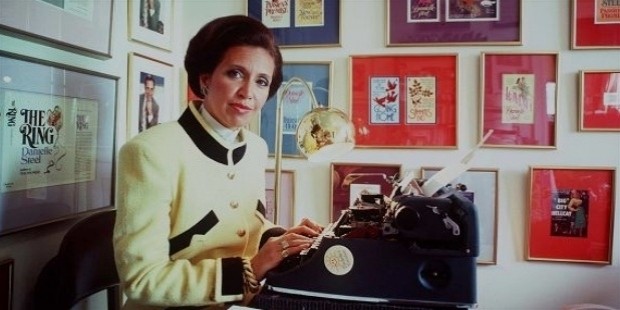
    Doug Nichol, a commercial and music video cinematographer, finds lots of lovingly framed images and scenes in this documentary about the “People’s Machine” and the people who love them. Between talking heads of famous typers and a reading of the Typewriter Insurgency Manifesto, Nichol’s best decision was picking a subject that is already damn photogenic.


    Just missed the cut: I, Tonya, Wind River, mother!, Star Wars: The Last Jedi, A Quiet Passion, and Lady Bird.

    I also liked: The Big Sick, Landline, Thor: Ragnarok, Spider-Man: Homecoming, I Don’t Feel At Home In This World Anymore, Guardians of the Galaxy Vol. 2.

    Haven’t seen yet: The Post, Phantom Thread, The Square.