Free corps literature emerged as critics of Weimar modernism; vented bitterness of Versailles and idealized war, manliness
Romanticization of violence, national honor, and revulsion at modern world incorporated into Nazi ideology
Remarque’s All Quiet punctured combat-inspired romanticism and thus was burned
So called “Legend of the Dagger Thrust” implicated home-front communists, Democrats, Jews, etc in losing WWI rather than soldiers
Thomas Mann, initially a promoter of a nationalistic state Third Reich, saw violence in early 1920s
Libraries had become extremely popular since the First World War due to depression and inflation in Germany during the interwar years
“Wolfgang Herrmann, a librarian who had involved himself with right-wing extremist student groups as early as the 1920s, had been working for several years on a list of literature ‘worthy of being burned.’ The first draft only listed 12 names, but this was soon expanded to 131 writers, subdivided into various categories.”
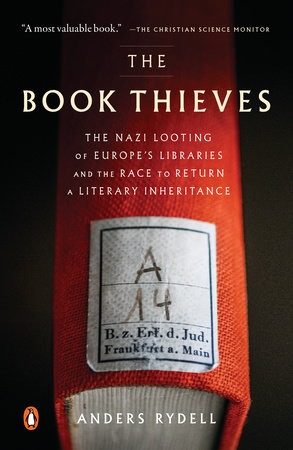
“The image of burning books has been altogether too tempting, too effective, and too symbolic not to be used and applied in the writing of history. But the burning of books became so powerful a metaphor for cultural annihilation that it overshadowed another more unpleasant narrative, namely how the Nazis did a great deal more than simply destroy books—they were also driven by a fanatical obsession to collect them.”
“[The SS and Himmler’s] war was not only fought by means of arrests, executions, and concentration camps. It is certainly no coincidence that Heinrich Himmler saw his organization as a National Socialist equivalent to the Jesuit order, which, after the spread of Protestantism in the 1500s, functioned as the spearhead of the Catholic Counter-Reformation. According to Himmler’s view of the world, the SS would in the same way form a bastion against the enemies of Nazi ideology.”
“There is a tendency to view the Nazis as unhinged destroyers of knowledge. It is also true that many libraries and archives were lost while under the control of the regime, either through systematic destruction or indirectly as a consequence of war. Despite this, a question that needs to be asked in the shadow of Himmler’s library is the following: What is more frightening, a totalitarian regime’s destruction of knowledge or its hankering for it?”