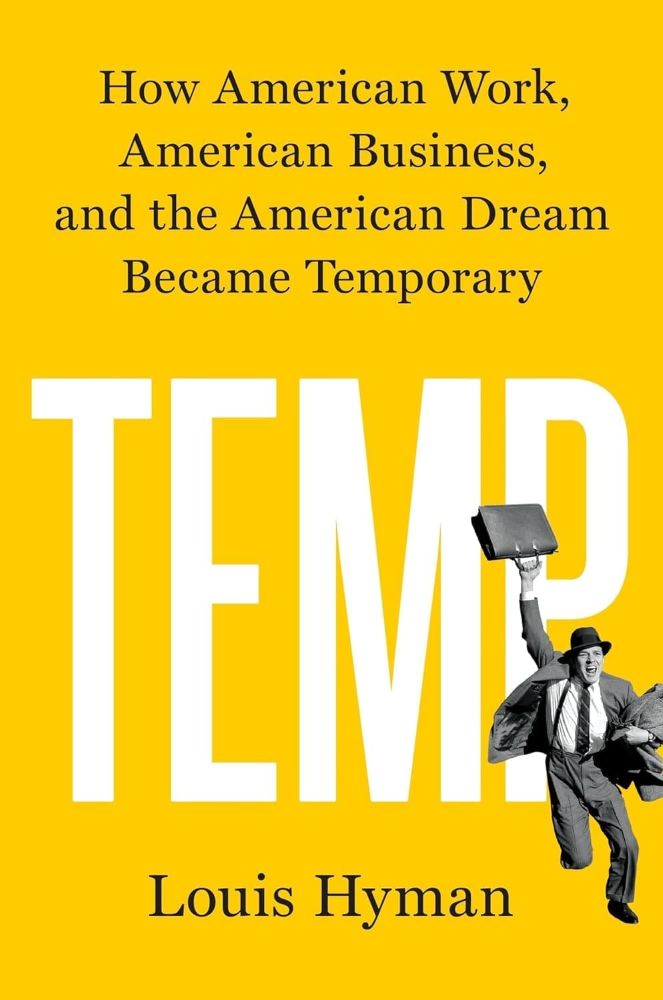
“For some at the top, this new economic arrangement produced great opportunities and wealth, but for most people, flexibility produced economic uncertainty.”
“The answer goes deeper than Uber, further back than downsizing, and contests the most essential assumptions we have about how our economy and our businesses work.”
Postwar stability changed in 1970s, when focused changed from stability to leanness
Risk-taking entrepreneur supplanted the risk-averse but loyal company man as capitalism ideal
Agricultural guest worker pay ended in 1964 but 20 million stayed to work illegally
“The postwar prophecies of office automation finally came in the 1980s, but instead of giving us leisure, they gave us the pink slip.”
Alfred Sloan of GM pioneered market segmentation with different cars at different price points
Accounting expanded after Crash, plus labor successes throughout 1930s and New Deal
Mechanization of agriculture in 1920s transformed American work: agriculture workers 31% of workforce in 1910, 18% in 1940, 6% in 1960
With men at war and women in factories, immigration opened for first time since 1920s for field work
Taft-Hartley bill postwar prompted new labor standards, cost of living increases, health insurance, pensions, but no strikes
“Job security, after the Great Depression, mattered more than anything.”
Manpower and Kelly Girl first postwar temp agencies
Temps helped ensure security of the permanent workforce by enabling sick days, vacations, and other perks
Interchangeability of tasks made temps possible: all work was essentially the same wherever
Winter of Manpower empowered women to work but as secondary to home
Ruthless meritocracy of consultancy class spread through corporate America
By 1970s economy was dependent on cheap, flexible Mexican labor
Management consulting invented in 1930s but flourished postwar
Manpower began franchising in 1950s: no need for investments or overhead so steady profits
“Manpower did for work what McDonald’s did for the hamburger”
Adoption of electronic data processing in 1950s/1960s drove accountants into consultant role
Computers compelled businesses to use temps for rote data entry: night shift temps enabled full use of machines and weren’t paid overtime
Stability was goal throughout 1960s; steady profits, not maximum gain
Rise of conglomerates in 1960s: not monopolies but big; seeking stability thru diversification
“Ad-hocracy” employees would be more like entrepreneur-contractors
Conglomerates turned into lead corporations with restructuring and downsizing in 1970s
Computerization led to automation of offices through routine tasks
Apple and GM experimented with “lean manufacturing” in 1980s, no unions
Constant downsizing and restructuring built class of “permanent consultants”
Upwork “the logical extension of Manpower into the internet”
Craigslist spawned other businesses based on its sections: Grindr, Etsy, Airbnb, etc
Anger at Uber about the quick wealth and low wages
Americans need “life security” not job security; health care, child care, basic income