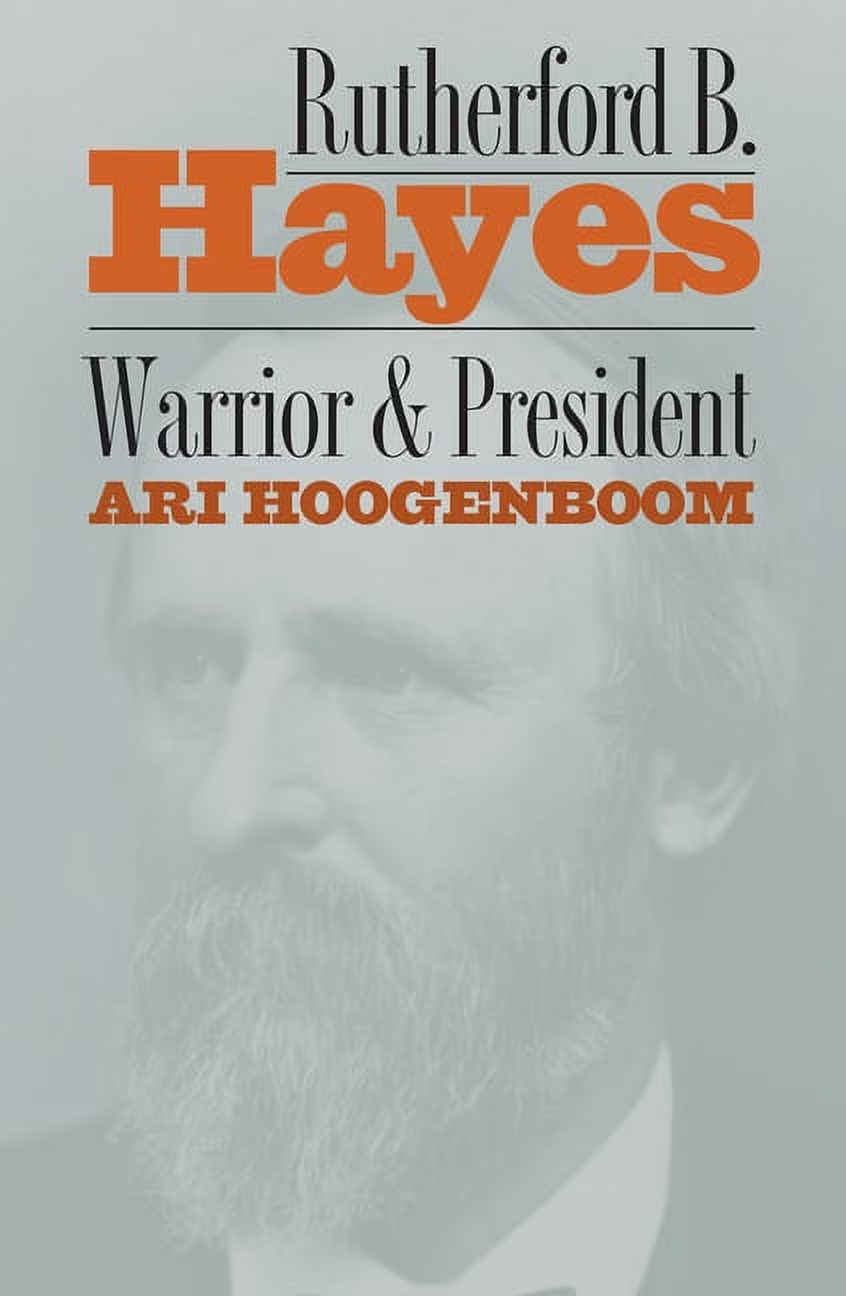
Born sickly, his mother Sophia was overprotective and widowed.
His uncle Sardis bumped into Senator Andrew Jackson en route to D.C.
Took a break from school and lived at home but grew lazy, which worried his mother and brought sister Fanny back from hers.
In college he took pride in his self-esteem and common sense.
Kenyon College’s two literary societies were often divided sectionally, a division Rud sought to heal to promote nationalism and inspire learning.
Met his hero Henry Clay in 1842 in Dayton at a speech.
Would test authority but wouldn’t challenge it totally.
Fanny had postpartum psychosis after second birth, which perturbed Rud.
Head smart and valedictorian, he was still awkward around ladies and company.
Entered Harvard law school in 1843, where he saw more politics in Boston.
Moved to Sandusky for law and sought to enter the Mexican War (which he thought was unjust), but his ill health kept him out.
Fanny kept campaigning for him to find a wife, but Rud wouldn’t.
Met Emerson and wasn’t all that impressed; Rud could only latch onto Unitarianism and very liberal Christian orthodoxy.
Engaged to Lucy Webb but put off the wedding until more money came in; she influenced him toward antislavery, temperance, and religion.
Offered legal defense pro bono in cases against slavery with fugitives.
Fanny died in 1856 after complications from a failed childbirth of twins.
Elected Cincinnati solicitor, supported the burgeoning GOP and Lincoln.
Seemed OK with secession until he hung with Lincoln more after election.
Entered war as major, then bumped up to lieutenant colonel.
Rud and General Garfield shared distaste of McClellan and soft-on-slavery soldiers.
William McKinley was in Rud’s regiment.
After loss at Chickamauga, predicted war wouldn’t end until June 1865.
In postwar Congress, Hayes quickly radicalized against Johnson and with Stevens.
Chaired literary committee, where he expanded Smithsonian’s space and collection.
Served two terms as Ohio governor, happy he got 14th and 15th amendments in Ohio.
Happy to be out of politics in 1872 when Grant’s admin was faltering.
Reelected governor in 1976 on eve of election, knowing he’d have a run at president; won a close convention versus Blaine.
Key campaign issues were civil service reform and enforcement of 14th and 15th amendments in the South; Southerners wanted home rule and patronage in exchange for Rud’s election.
GOP essentially chose presidency over the state GOP governments remaining.
Rud thought all black males should be able to vote.
Took aloof federal role during 1877 railroad strikes, to success.
Had Edison visit with his phonograph at the White House.
Wanted gold standard after the war, to be more stable.
South Carolina and Louisiana governors failed to protect blacks in elections despite pledges.
Criticized for issuing too many pardons.
Democrats were labeled the party of “rum, Romanism, and rebellion.”
Vetoed appropriations bill Democrats attached riders to banning use of military to ensure fair elections.
Garfield was compromise candidate at convention from deadlock between supporters of John Sherman and Grant.
Advocated for universal education as means to ensure black suffrage.
Wanted strong executive power: wanted repeal of Tenure of Office Act, federal power to ensure fair elections, and to prevent Congress from making political appointments (spoils).
Lucy hosted first White House Easter egg roll in 1878 after Congress banned it at Capitol.
Post presidency, served on the national prison reform association board with Theodore Roosevelt in 1883.
Argued against monopolies and for railroad reform.
Served as board president at Ohio State University.
Made social justice work foundation of his post-presidency.