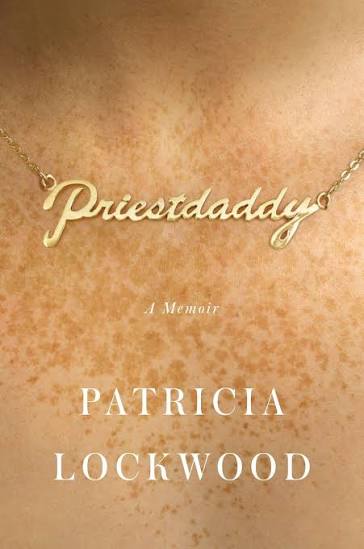
“The story of any courtship is one of ephemera, dead vehicles, outdated technology. Name cards, canoes, pagers. The roller rink, telegrams, mixtapes. Radio dedications. The drive-in. Hotmail dot com.”
“What exactly do Catholics believe?” I’d been preparing my whole life for this question. “First of all, blood. BLOOD. Second of all, thorns. Third of all, put dirt on your forehead. Do it right now. Fourth of all, Martin Luther was a pig in a cloak. Fifth of all, Jesus is alive, but he’s also dead, and he’s also immortal, but he’s also made of clouds, and his face is a picture of infinite peace, but he also always looks like one of those men in a headache commercial, because you’re causing him so much suffering whenever you cuss. He is so gentle that sheep seem like demented murderers in his presence, but also rays of sunlight shoot out of his face so hard they can kill people. In fact they do kill people, and one day they will kill you. He has a tattoo of a daisy on his lower back and he gets his hair permed every eight weeks. He’s wearing a flowing white dress, but only because people didn’t know about jeans back then. He’s holding up two fingers because his dad won’t let him have a gun. If he lived on earth, he would have a white truck, plastered with bumper stickers of Calvin peeing on a smaller Calvin who is not a Catholic.”
“Writers like being bodiless.”
“Who knows what a freak might do,” my mother hissed, which sounded almost like a philosophical koan. Who DOES know what a freak might do. Could God make a freak so big even he didn’t know what it might do?
“When we came home later, my father was wearing his most transparent pair of boxer shorts, to show us he was angry, and drinking Baileys Irish Cream liqueur out of a miniature crystal glass, to show us his heart was broken. I cannot overstate how tiny the sips he was taking were. He looked like a gigantic brownie drinking drops of dew.”
“What is home? Is it a sort of lap of location, that exists only if certain conditions are in place? Is it the intersection of rigidity and comfort—a junction of familiarity that you curl into? Is it a feeling? I don’t know, but I’m being hugged hard against it, and I can’t tell when I’ll be let go.”
“There is a love for structure in them that I recognize, and a desire to worship correctness that I know I share. When I look at them, I think: to prize traditionalism above all else in a church that began in revolution is to do a great violence to it. But I feel that same ache for the past in myself: to uphold the columns of literature, grammar, the Western tradition. The English language began as an upheaval; I am not protecting it when I try to guard it against change. The Jesus Christ of it, Chaucer, walked across the water telling dirty jokes, made twenty stories stretch to feed a million people, spelled the word “cunt” five ways, performed miracles. Any innovation I put down on paper is an attempt to remind myself of this. I am not modern. I was not born to blaze new paths or bring down walls. I break form against my nature to tell myself that revolution, too, is a tradition that must be upheld.”
“One of the men of God is pacing back and forth behind the banquet table, addressing the crowd, telling the sorts of jokes you only ever hear at church functions. Often these jokes involve sporting events that are being broadcast that day, and then all the men groan, because they love sports very much and would rather be watching them, but just kidding, because Jesus is a football that all of us can carry down the field for the win.”
“All my life I have overheard, all my life I have listened to what people will let slip when they think you are part of their we. A we is so powerful. It is the most corrupt and formidable institution on earth. Its hands are full of the crispest and most persuasive currency. Its mouth is full of received, repeating language. The we closes its ranks to protect the space inside it, where the air is different. It does not protect people. It protects its own shape.”
“A trick I often use, when I feel overwhelming shame or regret, or brokenness beyond repair, is to think of a line I especially love, or a poem that arrived like lightning, and remember that it wouldn’t have come to me if anything in my life had happened differently. Not that way. Not in those words.”
“There is something about an acceptance. It makes the blood and the brain effervesce; it climbs the ladder of the happiness you felt in the heat of the work.”
“Favorites are all right. Even God had them. And meaning, after all, is a kind of luck—some things just shine with it, and no one knows why.”
“The snow falls in cartoonish heaps, and I think blurrily of how forms are destiny: how the rain is destined for its torrents and the snow for its drifts, and the poems for their sheafs and me for the poems.”
“Being a writer meant my voice was in a different place. There was no rhyme or reason as to why I could make this sound and not the other. Always I felt that I was writing to the tune of some music that I learned very early and did not quite remember.”
“I thought a voice had to be about your fluency, your dexterity, your virtuosity. But in fact your voice could be about your failings, your falterings, your physical limits. The voices that ring hardest in our heads are not the perfect voices. They are the voices with an additional dimension, which is pain.”
“At this point, I consider myself on an anthropological mission, much like Margaret Mead. I have discovered that this makes almost anything bearable—it would have been such a salvation in my childhood to think I had been sent on a mission to notice. That would have turned my insubstantiality into something useful, even advantageous.”
“The natural order is a powerful narcotic. I don’t mean this in the sense of any opiate of the masses. If you sneer at religion as the opiate of the masses, you must sneer also at the brain, because the receptors are there. You must sneer at the body, which knows how to feel that bliss.”
“The desire to describe voice, gesture, skin color, is a desire to eat, take over, make into part of the pattern. I am happy every time to see a writer fail at this. I am happy every time to see real personhood resist our tricks. I am happy to see bodies insist that they are not shut up in this book, they are elsewhere. The tomb is empty, rejoice, he is not here.”
“What do I want? I want him to have a job, and be living in your house. I want us to stop selling heaven as the home we don’t get here. I want an afterlife for my anger; I want levitation, perfection, and white wings for it, and I want an afterlife for my question, which is an answer.”
“I did not make it out, but this does. Art goes outside, even if we don’t; it fills the whole air, though we cannot raise our voices. This is the secret: when I encounter myself on the page, I am shocked at how forceful I seem. On the page I am strong, because that is where I put my strength. On the page I am everything that I am not, because that is where I put myself. I am no longer whispering through the small skirted shape of a keyhole: the door is knocked down and the roof is blown off and I am aimed once more at the entire wide night.”
“It just seeped out of me, after I left the house. It was like forgetting a language you spoke a long time ago, when you were a child.”