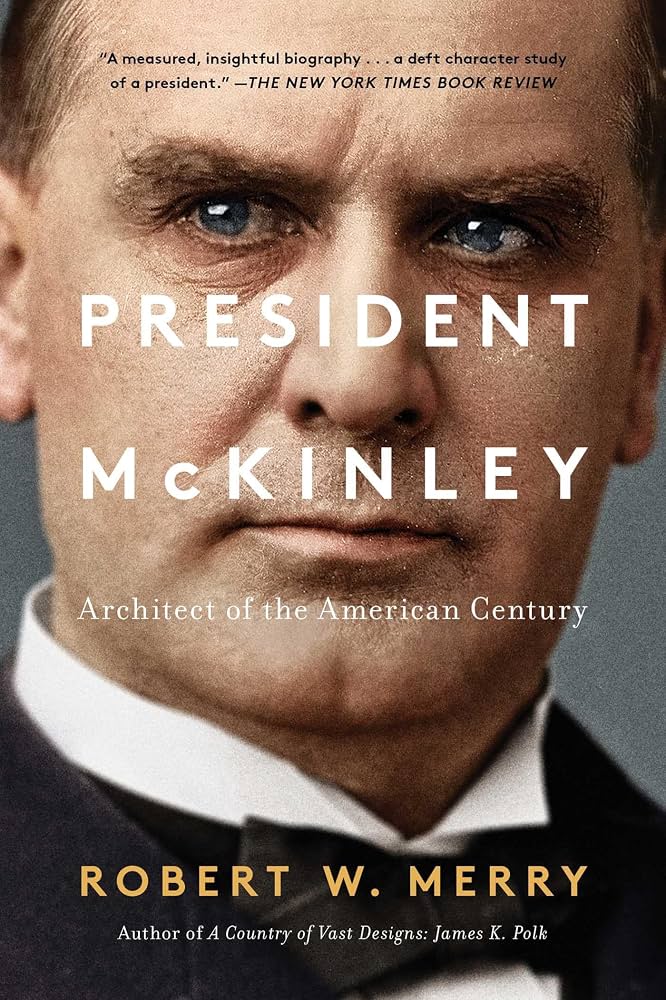
Cautious, methodical, “a master of incrementalism”
Wife’s illness postponed McKinley’s trip to Buffalo from June to September
1 of 8 children in anti-slavery Ohio household
Aged 18 when Civil War broke out; ended up in 23rd Ohio Volunteer Infantry Regiment, with Rosencrans and Major Rutherford Hayes
Achieved reputation as good manager; promoted to commissary sergeant, then lieutenant
Grew close friends with Hayes, stayed after war
Entered law after war, met Ida, outgoing and educated but soon developed epilepsy
Entered Congress in 1876 along with Hayes in presidency; well liked and competent, aimed to become president
Obsessed with tariff: appointed chairman of Ways and Means in 1888, before tariff debate of 1890
Federalists/Whigs favored high tariff and public works (Hamilton, Clay), Democrats opposed to federal regulations (Jefferson, Jackson)
Tariff hot issue bounced him from office in 1890 by 300 votes, but ran for and won Ohio governor in 1892
Mark Hanna a donor and businessman, political consultant passionate about McKinley
Economic downturn helped GOP reclaim House in 1896
McKinley had cosigned loans of friend who went under; people rallied and fundraised for him, putting money together in pay back loans, and McKinley paid back in installments
GOP bosses assured his nomination if he pledged to put appoint Boss Platt as Treasury secretary; he refused
Hanna installed Charles Dawes as head of Chicago bureau of campaign; sought to modernize campaign techniques, with literary bureau and Traveling Men’s Bureau to direct campaign message
Didn’t want to compete with William Jennings Bryan on the stump, or leave Ida, so started Front Porch campaign
Theodore Roosevelt said Bryan deserved “the contemptuous pity always felt for the small man unexpectedly thrust into a big place.”
Systemic targeted campaign literature had never been executed in large scale
Cuban revolution just before inauguration; Hawaii annexation debate also bolstered US sphere of influence
“Convivial demeanor masked a calculating political operative” “occasional ruthlessness” “unbending resolve” “incremental leadership” “rhetorical blandness” – Elihu Root: “He cared nothing about the credit, but McKinley always had his way.”
Sought to buck Reconstruction trend of Congressional preeminence
Increased travel, press relations to show command and sway public opinion
Ida’s seizures kept hidden; sudden afflictions mixed with sociability as First Lady; was still open about it
Presidency issues: tariff, bimetallism, Hawaii, opening of China, Philippines, Cuba
Hesitant to war with Spain, despite inflamed Congress and populace after the Maine explosion
Acquisition of Philippines from Spain hotly debated; many skeptical of imperialism, including McKinley
Opening of China enlarged US diplomatic profile and expanded influence
Roosevelt popular in 1900 but was New York governor and didn’t want VP; Hanna didn’t like him, but Platt wanted him out of New York
Did he cause the big changes or passively watch them happen and react?
“moved men and events stealthily but effectively through tumultuous times”