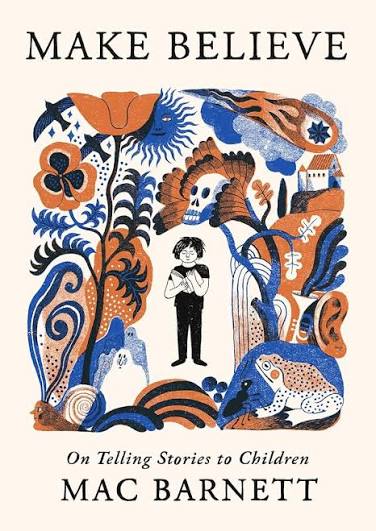
“Our definition of children’s books must be expansive, encompassing works as varied in subject, style, and viewpoint — and even quality — as we find in books for adults. Really, children’s books must be as varied as the lives of the children who read them. When children cannot find their experiences and emotions — even (and especially) their fear, jealousy, sadness, and anger — reflected in the stories they read, two things can happen, both bad. Kids may abandon reading and seek out art and media that better reflects their lives. Or, instead of deciding that there is something wrong with books, children may decide that there must be something wrong with themselves, and become ashamed of the very human feeling, which adults have excluded from their literature. As an author, I find the first possibility dismaying. But the second outcome should be unbearable to us all.”
“Didacticism, always the enemy of good storytelling, is rampant in children’s books, thanks to our long-standing insistence on stories that teach kids lessons. But children’s literature can be a refuge from the relentless paternalism of adults. The children’s book author is under no obligation to instruct or encourage or explain. Our only duty is to tell good stories. And the best stories for kids — like the best stories for adults — tell the truth about what it means to be a human in the world. But it means something very different to be a child in this world than it does to be an adult. The best children’s writers tell the truth in a way that is recognizable and authentic to children.”
“When we celebrate children’s literature, we must avoid the trap of utilitarianism. Claims that books will improve kids’ behavior, enhance their emotional development, or raise their test scores may be true, but they inevitably end up limiting the ambit of children’s literature. Art need not be useful. A children’s book is not a tool. Champions of kids’ books should also be wary of sunny appeals to futurity: “We are making lifelong readers! Shaping future leaders! Molding model citizens!” Yes, okay, sure, the children are the future; in twenty years, more people who are currently kids will be alive than people who are currently adults. But the children’s writer — and anyone who gives books to children — would do better to think about children in the present. Kids are human beings right now, with rich interior lives. They deserve entertaining stories and meaningful art.”
“When literary purists dismiss genre fiction, they’re failing to see the potential of a certain mode of storytelling. But snobbery is a literary misdemeanor. When we dismiss children’s books, what we’re really doing is failing to recognize the potential of children. It’s a literary crime of a much greater magnitude. If you don’t think children’s books are real books, on some level you don’t think children are real people.”
“Didacticism tends to warp narrative, flatten characters, and mar beauty. Plots bend toward the author’s point. Protagonists are role models, not heroes. Epiphanies come out of nowhere. But the didactic impulse’s worst failing is an inability to imagine a child as anything other than a thing to be taught.”
“A moral is an immutable lesson, intentionally encoded into a story by the author, meant to be inscribed on the child’s brain. Meaning, though, is created collaboratively: Children bring their individual intelligence and experience to an artwork and, in tandem with is creators, decide what that story means to them.”
“In an educational culture increasingly fixated with quantification, the children’s writer must stubbornly champion the ineffable. Stories are particularly good at ambiguity, complexity, paradox, and contradiction.”
“The book’s nonstandard punctuation and some poetic ambiguity — there are no vocative commas — make it possible that “goodnight” actually functions as an adjective, so that, as the bunny drifts off to sleep, the moon becomes “a goodnight moon,” socks become “goodnight socks,” etc.”
“Fiction is a kind of game, and reading is a way of playing. Each story comes with its own set of rules. Some of those rules are inherited from genre or the novelistic tradition. Others are local to the story.”
“When adults read, we make believe too. It’s just that kids are much better at it. For one thing, they’re more adept at learning new rules — and not just because it’s the way they play. It’s the way kids live. When you’re a child, every room you enter and every encounter you have is governed by a new and unspoken system of protocols that you must quickly divine.”
“Children are perceptive, flexible, and open-minded. They have to be. Childhood is a long series of experiments — testing out hypotheses and making adjustments. It seems only right that so much of the best children’s literature is experimental too.”
“The sublimity of a sentence or a picture, the thrill of a plot, the intimacy of communing with a character — the beauty of a good story and the truth it contains can shock us into surrendering our certainties. And in that gloriously unsettled moment, our sense of the possible is enlarged. Every story is a secret door, an invitation to imagine another world and, by believing so, make it real.”
“The curiosity, sensitivity, and imagination of children will always demand new and ambitious fictions. Kids have made me a better writer, but they’ve also made me a better reader. The genius of children is a challenge to all grown-ups, if we can humble ourselves, to let kids teach us how to read: to marvel at the possibilities of language, to blur the boundaries of ourselves, and to be changed for a moment or forever. May we always be unfinished.”