“From these experiences came a vision for the book open before you: a testimony about how certain films, like pillars of cloud and fire in the Old Testament stories, have illuminated my journey from a small, supposedly secure, “Christian” world and into the “dark” world I am called to live in and love.”
“I find that the work of writing about what I have seen, and then the work of attending to other interpretations, is where art fulfills its promise. I become more aware of what I know and what I don’t know. I lean in more intently, making connections, exploring, testing possibilities.”
“If you love Love, you know the God know the God I’m writing about. At the movies, we can catch glimpses of this God in Agnes Varda’s love for the poor and overlooked, in Spike Lee’s laments over injustice, in Greta Gerwig’s sense of humor, in fits of conscience that seize unlikely characters in the films by Jean-Pierre and Luc Dardenne, in the comic genius of Edgar Wright’s editing, in Baz Luhrmann’s lush extravagance, in Yasujiro Ozu’s powerful restraint. We’re told that wherever two or three are gathered in Love’s name, God is there. The most lasting work, the strongest relationships, and the highest art come from loving collaboration. So, as I say to film students, if my references to God make you uncomfortable, try substituting that title with “Love” and I suspect that we can continue our quest in a meaningful fellowship.”
“The glory of art cured me of any impulse to proselytize.”
“Films also save me—most of the time, anyway—from resentment toward those whose practice I now find misguided. Cinema illuminates the limitations and distortions endemic in the human institutions I’ve known; it also reveals what was meaningful there, what I can keep, what I can carry forward with gratitude.”
“I’m already inclined to think of Columbus as a religious movie. No, not just a spiritual movie—a religious movie. That is to say, the movie is a construction, a thing made by humans to express larger ideas about the nature of being. It offers us a kind of liturgy, just as the map of local landmarks provides Casey with a liturgy: a sequence of points at which we experience different aspects of something Mysterious and Sublime. For this is what art does: It organizes an expression of an experience of something profound into an insufficient but nevertheless powerful equivalent. In that sense, then, might we not see all art as religious?”
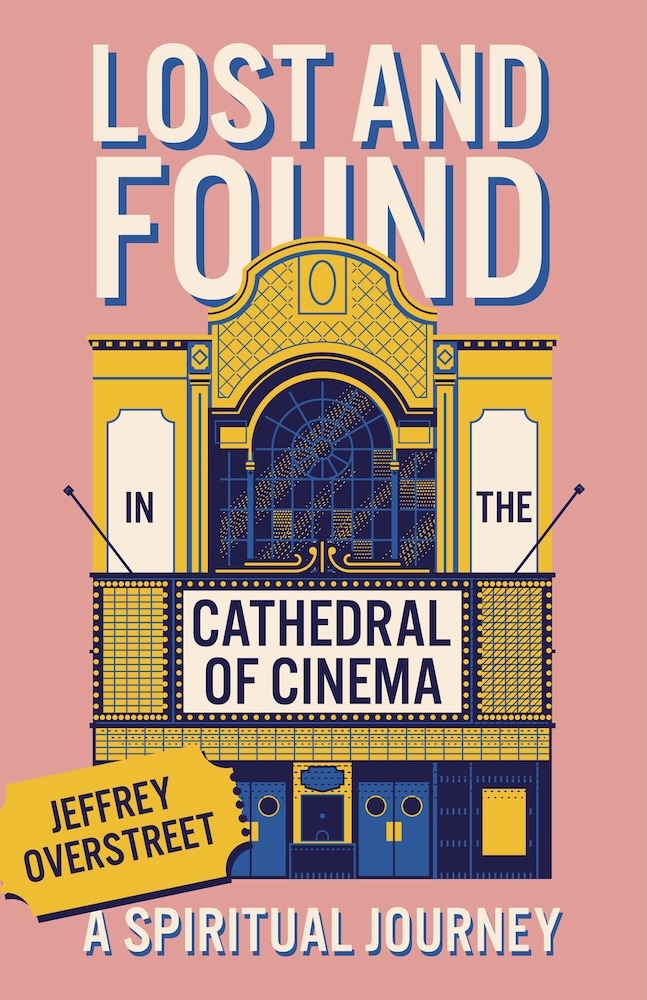
“My Columbus is a cathedral of cinema. It’s a place of reverent attention, self-examination, awestruck mindfulness of the created and the Creator. It occasions intimate fellowship, confession, and celebration with others past and present, near and far. The art and architecture of a cathedral are designed not merely to fulfill practical purposes, nor to draw attention to themselves, but to draw our attention to the Source of their inspiration.”
David Dark: “We only receive art when we let it call our own lives into question.”
“My awakening came about because I found that the windows of art, and what I could see through them, were irresistible. Despite the guilt that often burdened me for attending to “un-Christian” imaginations, I kept on stumbling into beauty.”
“A child’s play is not necessarily frivolous. It is a rehearsal for real challenges. Any artist worth their ink knows this. To invest creative energy in a state of questioning, to strive in faith rather than in certainty, can be costly in the moment. But the hope is for a discovery. Love is not a zero-sum game; it ultimately blesses giver, receiver… the whole world.”
“We cannot live in our Moonrise Kingdoms—our island getaways, our euphoric rock concerts, our anniversary vacations, our communion-tables on Sunday morning—these escapes into freedom, clarity, and renewal. But it does us good to visit. Echoes of an ideal follow me home. Back to the dispiriting daily news. Back to learn who’s burning down love today. Back to the hard work of achieving harmony, of strengthening the good things that remain. While disillusionment with community, country, and church can sometimes make me want to “go find a tree to chop down,” the reminder that a “perfect campsite” is possible makes it easier to rejoin the orchestra and move forward in hope.”
“It is embarrassing to admit how much influence food had on dismantling my fears of other cultures. And I won’t ever suggest plates of Panang curry cure racism. But food is an art, and the love of one art can so easily lead to the love of another. Perhaps this is why films about culinary adventures have so intoxicated me. Juzo Itami’s Tampopo, Ang Lee’s Eat Drink Man Woman, Brad Bird’s Ratatouille, Jon Favreau’s Chef, the David Gelb documentary Jiro Dreams of Sushi, Michael Winterbottom’s The Trip and its sequels, Michael Sarnoski’s Pig, Tran Anh Hung’s The Taste of Things—these shine with a sacramental glow, as adventurers cross borders to commune in the poetries of seductive languages.”
“Again and again, I find that the films that mean the most to me are those films that I did not necessarily “like” the first time I saw them. They are films that stick with me, films that return to my mind months after seeing them for the first time, films that draw me back again to wrestle with the questions that linger in my mind after that first viewing.”
“More and more, the world seems to me to be a living language I’m meant to heed and understand. I want to live in the expectation of revelations that might shine out on a screen but can never be reduced into paraphrase.”
“Art can so easily become an end in itself—a distraction, an addiction, a job. But if we pay attention, attention pays. If, to borrow a phrase from e. e. cummings, “the eyes of our eyes” are opened, we might find illumination that compels us into meaningful action.”