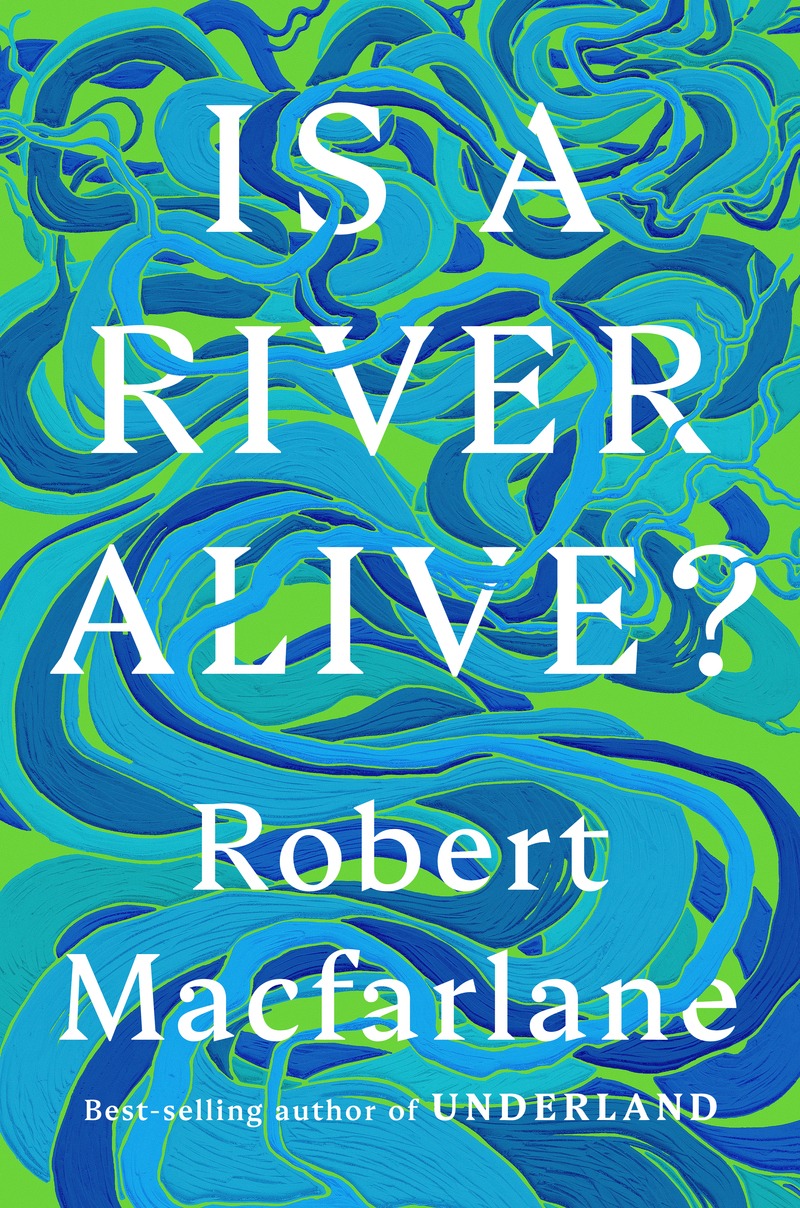
“Most of us, I think, once felt rivers to be alive. Young children are natural explorers of the vivid in its old sense: from the Latin vividus, meaning ‘spirited, lively, full of life’. Young children instinctively inhabit and respond to a teeming world of talkative trees, singing rivers and thoughtful mountains. This is why in so much children’s literature — from fairy tales to folk tales, across centuries and languages — a speaking, listening, convivial landscape is a given.”
“The language of hydrological governance refers to rivers, streams and lakes as ‘waterbodies’. To the forty thousand recognized waterbodies in England, Wales and Scotland should be added another 65 million or so — for every human is, of course, a waterbody. Water flows in and through us. Running, we are rivers. Seated, we are pools. Our brains and hearts are three-quarters water, our skin is two-thirds water; even our bones are watery. We were swimmers before we were walkers, slow-turning like breath-divers in the dark floatation tank of the womb.”
On Heidegger: “In his account, hydraulic engineering – for all the miracles it brings – fundamentally transforms our orientation to the river, replacing its autonomous liveliness with a subdued servitude. This infrastructural reframing of the river, he argued, was symbolic of the broader consequences of technocracy’s administrative effort to entrap nature ‘as a calculable coherence.’ Nothing is good in and of itself; everything must be good for something. The identity of ‘river’ is stabilized and singularized, rendered legible only in terms of flow-rates and megawattage.”
“Meaning, as well as water, can be impounded: can still and settle behind dam walls of thought. The impounded meaning of ‘river’ is now one of ‘service provider’, an identity held in place by structures of the imagination as well as of the land. We have become increasingly waterproofed: conceptually sealed against subtle and various relations with rivers, even as they continue to irrigate our bodies, thoughts, songs and stories. Rivers run through people as surely as they run through places.”
“Muscular, wilful, worshipped and mistreated, rivers have long existed in the threshold space between geology and theology. They give us metaphors to live by, and they decline our attempts to parse them. Unruly, fluid and utterly other, rivers are – I have found – potent presences with which to imagine water differently. We will never think like a river, but perhaps we can think with them.”
Ursula K. Le Guin: “One way to stop seeing trees or rivers or hills only as natural resource is to class them as fellow beings – kinfolk. I guess I’m trying to subjectify the universe, because look where objectifying it has gotten us. To subjectify is not necessarily to co-opt, colonize, exploit. Rather it may involve a great reach outward of the mind and imagination.”