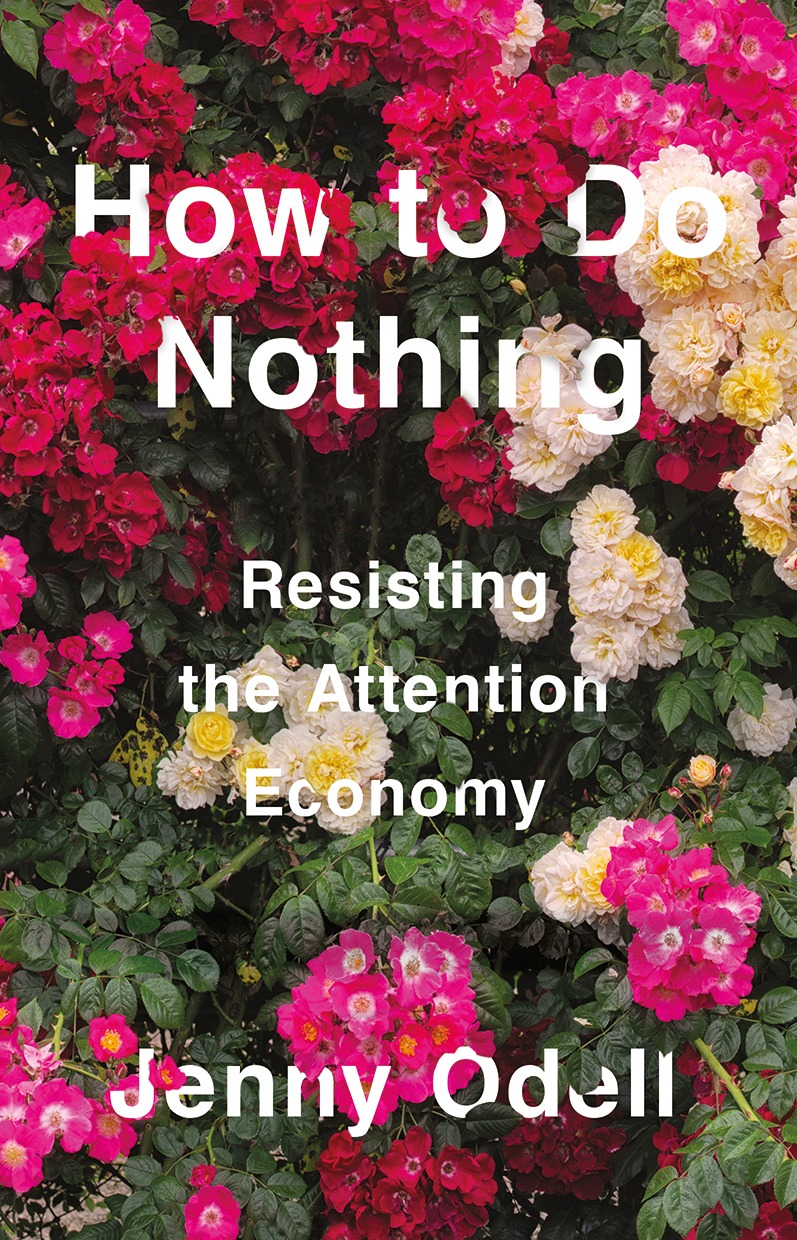
“We still recognize that much of what gives one’s life meaning stems from accidents, interruptions, and serendipitous encounters: the “off time” that a mechanistic view of experience seeks to eliminate.”
“Solitude, observation, and simple conviviality should be recognized not only as ends in and of themselves, but inalienable rights belonging to anyone lucky enough to be alive.”
“What does it mean to construct digital worlds while the actual world is crumbling before our eyes?”
“To resist in place is to make oneself into a shape that cannot so easily be appropriated by a capitalist value system. To do this means refusing the frame of reference: in this case, a frame of reference in which value is determined by productivity, the strength of one’s career, and individual entrepreneurship. It means embracing and trying to inhabit somewhat fuzzier or blobbier ideas: of maintenance as productivity, of the importance of nonverbal communication, and of the mere experience of life as the highest goal. It means recognizing and celebrating a form of the self that changes over time, exceeds algorithmic description, and whose identity doesn’t always stop at the boundary of the individual.”
“It’s only now that I fully understand where a life of sustained attention leads. In short, it leads to awareness, not only of how lucky I am to be alive, but to ongoing patterns of cultural and ecological devastation around me—and the inescapable part that I play in it, should I choose to recognize it or not. In other words, simple awareness is the seed of responsibility.”
“To capitalist logic, which thrives on myopia and dissatisfaction, there may indeed be something dangerous about something as pedestrian as doing nothing: escaping laterally toward each other, we might just find that everything we wanted is already here.”
“This type of embarrassing discovery, in which something you thought was one thing is actually two things, and each of those two things is actually ten things, seems like a simple function of the duration and quality of one’s attention.”
“Perhaps the granularity of attention we achieve outward also extends inward, so that as the perceptual details of our environment unfold in surprising ways, so too do our own intricacies and contradictions.”
Audre Lorde: “Caring for myself is not self-indulgence, it is self preservation, and that is an act of political warfare.”
“The practice of doing nothing has something broader to offer us: an antidote to the rhetoric of growth. In the context of health and ecology, things that grow unchecked are often considered parasitic or cancerous. Yet we inhabit a culture that privileges novelty and growth over the cyclical and the regenerative. Our very idea of productivity is premised on the idea of producing something new, whereas we do not tend to see maintenance and care as productive in the same way.”
“What I’m suggesting is that we take a protective stance toward ourselves, each other, and whatever is left of what makes us human—including the alliances that sustain and surprise us. I’m suggesting that we protect our spaces and our time for non-instrumental, noncommercial activity and thought, for maintenance, for care, for conviviality. And I’m suggesting that we fiercely protect our human animality against all technologies that actively ignore and disdain the body, the bodies of other beings, and the body of the landscape that we inhabit.”
“To stand apart is to take the view of the outsider without leaving, always oriented toward what it is you would have left. It means not fleeing your enemy, but knowing your enemy, which turns out not to be the world—contemptus mundi—but the channels through which you encounter it day to day. It also means giving yourself the critical break that media cycles and narratives will not, allowing yourself to believe in another world while living in this one.”
“When I try to imagine a sane social network it is a space of appearance: a hybrid of mediated and in-person encounters, of hours-long walks with a friend, of phone conversations, of closed group chats, of town halls. It would allow true conviviality the dinners and gatherings and celebrations that give us the emotional sustenance we need, and where we show up for each other in person and say, “I am here fighting for this with you.”