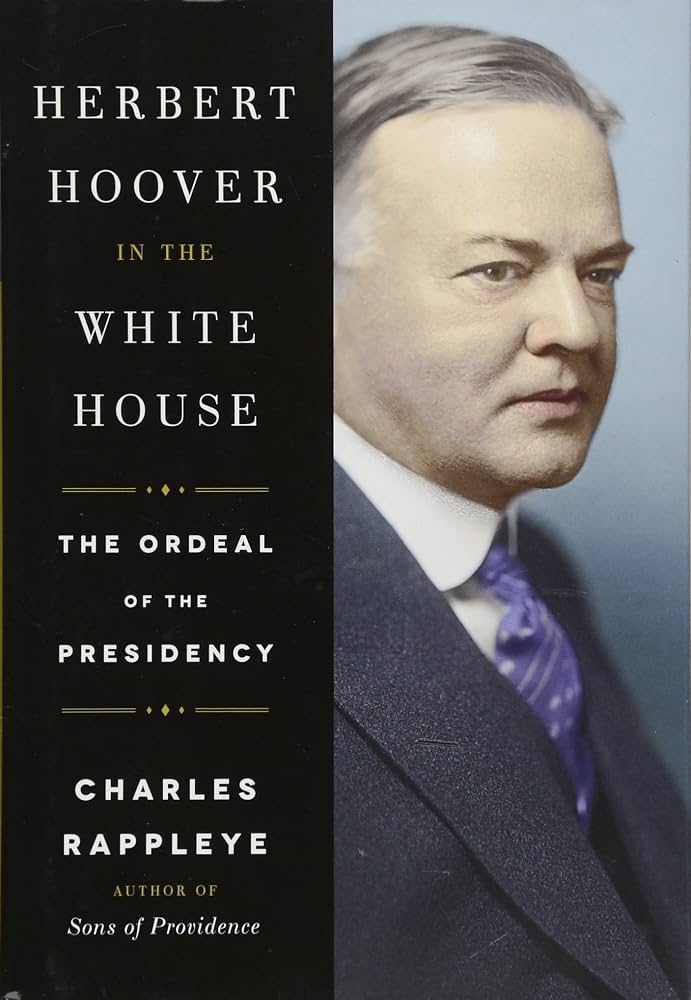
Geologist by training and engineer by trade
444 to 87 electoral count in 1928; took Smith’s NY
Chief difference with wet Smith was Prohibition
Mutually antagonistic relations with press
Didn’t give Attorney General to Donovan; lesser Philippines post offered but refused
Feared being construed as “superman”, problem solver
First president to have telephone on desk
Debate at Fed about raising interest rates to dampen wild speculation, but raising would hurt little guys
Hoover recommended to friends to get out of market in April; saw it early but hamstrung by Fed
For a leader rooted in the public will, unable to connect personally
Could have recovered from initial crash of stocks, but job losses and layoffs (fear?) mounted
Hoover’s Farm Board created to steady prices, which spurred production – the surplus being an unintended consequence and killer after crash
Senator Bond, a supporter, turned on Hoover, who wouldn’t fight for increased agriculture tariffs, which industry got instead
Signed compromise bill for veterans benefits, after vetoing bonus-laden bill
Initial shocks from crash seemed to fade: previous market breaks had been deep but quick, so overall optimism for a time before the “whole mosaic” of the situation came together
Hoover’s focus on optimism clouded reality and made him brasher and combative with Congress
Response to flooding in South more vigorous and reminiscent of old Great Humanitarian
Opposed public aid: thought it would reward shirkers and discourage enterprise, and stifled American local impulse to charity
Repeatedly downplayed effects during the crisis
Combination of severe drought and economic dislocation motivated Congress to do more than usual private charity
Hoover deeply committed to voluntary giving and individual impulse to help one’s neighbor, and saw government as inefficient
Credit crunch of 1931 spread around the world and triggered proposal to suspend reparation payments from WWI
Creation of Reconstruction Finance Corporation in December 1931 the largest peacetime government intervention into private credit market in history; (perceived aid to institutions, subsidies to bankrupt railroads reminiscent of 2008 bailout)
Hoover feared Smith in 1932 more than Roosevelt
Appointed liberal Democrat Benjamin Cardozo to Holmes’ vacant Supreme Court seat to compromise and not fight with Congress
Despite the economy, Prohibition was big campaign issue; repeal vs. enforcement
Bonus Army ragtag vets camped in DC; Hoover brought it MacArthur and Maj. Eisenhower to quell, which turned into overreaction and completed picture of “cold and heartless president”
constitutionally gloomy, aloof, The Great Humanitarian, The Master of Emergencies, absent-minded professor, gregarious hermit