“Patriarchy would, without a doubt, bring significant unearned privilege to my sons and their peers throughout their lives, but increasingly I was also realizing that this would come at a high cost. It all seemed like some kind of soul-compromising bargain from a Greek myth. Boys and men automatically receive substantial material life advantages by virtue of their maleness, but at the cost of their morality, their freedom to access the full range of human feeling and connection.”
“The last thing I wanted was to align myself emotionally with the men’s rights activists, the right-wing “boys are the real victims,” #HimToo apologists. Was there a way to square this and offer real empathy to boys, give them a more expansive story about their own possibilities, without betraying any feminist principles?”
“We want to give our sons a more inspirational narrative about their own lives and possibilities: To thrive and feel pride, not shame, in their boyhood. To find their tribe and their identity. We want to raise them to understand and acknowledge their many, many advantages and privileges as young males and to learn to navigate those with awareness and compassion. We want to hold our boys accountable but not make them feel so defensive that they get angry or depressed. And I especially want to do all this with both my feminist principles and my mental health intact.”
“The most consistent findings are not just that boys are more aggressive or rambunctious or anything else particularly “boyish.” They are also—by almost every measure-more sensitive, fragile, and emotionally vulnerable.”
“The realities of male vulnerability mean that the more nature there is in the mix, the more nurture boys actually need. Because of their innate fragility, boys need more parenting than girls, not less. They need more opportunities to build relationships and engage with their emotions than girls do. In their early years, boys also need more care from responsive caregivers, and they need it for longer. Sadly, however, research shows clearly that, on all of these counts, they actually get significantly less.”
“At a gut level, it’s hard to square male privilege with male vulnerability, and a big ask for many women to muster much sympathy for boys and men. Centering harm to men seems to minimize the countless social obstacles and injustices that women and girls have always faced. It’s tempting to be punitive rather than sympathetic, to try to somehow even the score and hold young boys accountable for the sins of their fathers, But operating from a place of punishment or shame or lack of empathy for boys is counterproductive in creating empathetic well-adjusted men. For boys, vulnerability and privilege coexist in a complex rela-tionship, Masculine norms and expectations confer countless advantages, but they also bring significant harm. The two come together in male socialization to create a contradictory and strangely destructive combination of indulgence and neglect.”
“While girls are admired for engaging in traditionally male pursuits, for a boy or man to enjoy anything coded as feminine is still somehow shameful, and the same applies to relationship-driven stories.”
“Stories matter. They are our emotional and social blueprints, what we come to expect of ourselves and others and how we engage with our lives. And through the stories they are told, boys and girls are tracked into two subtly but significantly different value systems: one that centers relationships, emotions, and complex social dynamics; and another that largely ignores them, depicting human interaction as essentially oppositional and competitive.”
“Emotional labor can be taxing, for sure, but it is also one of the fundamentals of human intimacy. Without it, boys are missing out on internalizing concepts and learning skills that are crucial to a full, connected, psychologically healthy life. Our failure to teach boys these skills and give them role models for a more intimate and emotionally focused kind of friendship has left many of them struggling to form the kinds of deep and supportive connections they need and crave.”
“With their lack of emotional intensity and fervor, I find my sons’ friendships alien. More than anything, this fundamentally different approach to human intimacy is at the heart of any grief I feel about not having a daughter. I feel worried for my sons, and at some level I fear that they are missing out on the best thing in life. And I feel the loss for myself, a sadness that I won’t get to witness that particular joy unfold for my own children.”
“Relational skills are hugely complex. If a marketing team was trying to brand them for men in a way that would remove the trivializing stigma of femininity, they would call the skill set something along the lines of “complex live-action social data processing,” or “military-grade emotional surveillance.” It’s not just about sharing your feelings. Strong relationships involve an intricate moment-to-moment balancing of our own needs versus another person’s. We all have a built-in capacity for this, but it’s also something that can be learned and nurtured.”
“In addition to being more open about their own emotions, boys also need to learn how to listen to other people’s: to take an interest in others’ lives and experiences, ask the right questions, judge the right moment for a conversation, and figure out how to respond appropriately to someone else’s vulnerability. Just telling boys and men to be more vulnerable without modeling and teaching all the other complex skills of social and emotional give-and-take isn’t enough, and could easily just end up generating more emotional labor for the women in their lives.”
“The stories we hear and tell help us determine what is possible for us, how we should be showing up in the world. And in the vast majority of situations we are likely to encounter in the course of a lifetime, there is no hero and no villain, no death and no glory, but just a bunch of needy humans kvetching over who said what. Learning to navigate that with grace and skill is the beating heart of human connection.”
“How much we are all prepared to admit, even to ourselves, depends heavily on who we are talking to. It makes me realize again just how much of the nature-nurture debate comes down to politicized tribalism, and how little room it leaves for nuance.”
“The stories we tell boys about what it means to be a man—that life is a series of battles to fight, that relationships are about competing rather than cooperating, that they must be stoic and tough and not share their emotions or validate other people’s—all work against building strong relationships. Masculine norms don’t help boys become healthy adults. They stand in the way.”
“Relationships with friends, family, and community are the best inoculation for boys against the pull of the misogynistic influencers online. The more connected and loved boys feel, the more community they have in their own lives, and the more empathy they feel from their loved ones, the less need they have to search for belonging in these spaces.”
Re: hero’s journey – “Boys are socialized to see themselves as the hero on his journey and the main character in any story, and to see everyone else, and especially women, as minor characters or narrative foils. As such, boys subtly absorb the idea that women and girls are not quite actual people with their own true agency or interiority, but rather abstractions that exist to further a man’s narrative.”
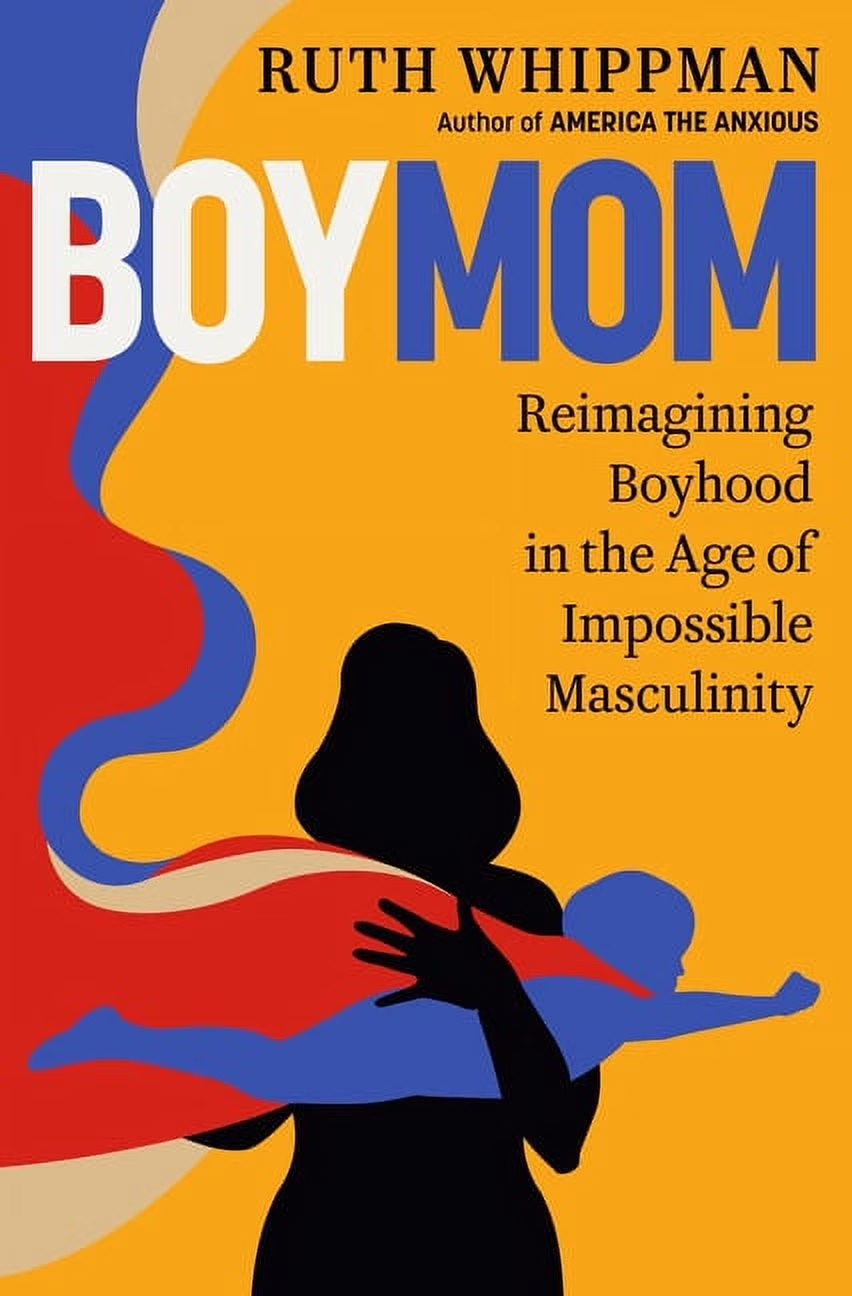
“The hero’s story creates impossibly punishing expectations for boys of what a man should be: physically invulnerable, emotionally bulletproof, and ideally, superhuman. Actual boys and men, with human flaws and vulnerabilities, will always fall short. Failure is built into the project.”
Greek concept of kleos, a kind of fame and glory and eternal renown – “With all this in the background, it makes sense that men might avoid the boring tasks of adulthood. If you are shooting for eternal renown, doing the laundry or studying for your social studies test might well feel a little beneath you. The model of quiet diligence and cooperation that girls are encouraged to emulate can easily read as emasculating when compared to the glorious feats of the hero.”
“Boys don’t need more masculinity, but freedom from that paradigm; they need permission to be fully human without the pressure to conform to oppressive masculine norms.”
For girl academic performance, emphasis is on social factors instead of biology, but it’s the reverse for boys
Main academic gap between boys and girls now is reading, which “might be driven as much by the social messages we give boys, that reading is a feminized activity.”
UCLA gender studies professor Juliet Williams: “If you teach boys that activity and aggression are good and passivity and quietness are bad, they’re not gonna read. And a student who doesn’t read is not going to be a good student.”
Incel online communities ironically much more emotionally open than other male spaces due to their inability to participate in systems of masculinity
Gender theory holds masculinity as a hierarchy, with high-status men at top, then less powerful and more effeminate men below, and women at bottom; incels demeaning women then makes sense within that context
“Men have systemic power, without a doubt, but that framework is perhaps of limited use when trying to understand, say, the issues of a traumatized young man barely out of adolescence with no financial or social capital and serious mental health issues. For someone such as James, it can start to feel as though male emotions get dismissed from both sides. For every right-wing tough guy urging his crying son to man up, there is a voice from the left telling him that to voice his problems is to take emotional airtime away from a woman, whose suffering is more valid. These are not morally equivalent, of course, but in practice the impact can be similar. It’s not hard to see why incel forums and manosphere spaces can start to feel like the only place that a troubled young man might find a sympathetic ear, or a sense of belonging or empathy.”
“The same people who urge men to be more emotionally expressive are often also the ones who take a principled stand against hearing how men actually feel.”
“In the post-#MeToo era, at some level the only message about sex that seems reasonable to give to boys is one of harm reduction. The wider cultural narrative around male desire is so steeped in a history of wrongdoing that it can easily end up casting boys as little more than predators-in-waiting. In this story, the best we can hope for from boys’ emerging sexuality is to minimize the damage it is likely to cause. Of course we need to educate boys about consent, but I wonder what this is doing to boys psychologically, to have their own sexuality and desires framed from the outset as inherently harmful.”
“With the looming threat of cancel culture on the one hand, and the lingering pressure to be dominant and masculine on the other, boys are now caught between two contradictory sets of expectations, which at times can seem impossible to reconcile.”
“Boys are working within two conflicting systems: one that demands they be sensitive, cautious, and emotionally nuanced, while the other encourages them to be domineering, emotionally stunted, and borderline aggressive. And the consequences of failure can be severe in both systems. Stray too far in one direction, and you are a pussy. Stray too far in the other, and you might be canceled.”
Teenagers having significantly less sex than previous generations; for boys, biggest factors are fear of cancel culture/sexual assault and ease of porn use
“As they grow up, masculine norms harm boys in other ways, telling them to value competing over relating, winning over connecting, fighting over cooperating. Our ideals for masculinity teach boys that vulnerability is humiliating, that they need to be physically and emotionally untouchable. Shame is built into the foundations; the expectations are by definition impossible to meet, leaving men and boys living with the constant prospect of humiliation and failure.”
“Tweaks such as “healthy masculinity” or “aspirational masculinity” are not really challenging the basic idea that a boy needs to be masculine in order to be seen as worthy. Instead, they subtly reinforce the idea that masculinity itself is non-negotiable. I would rather see a world in which “aspirational masculinity” rings as sexist and regressive as “aspirational femininity.”
“We have tended to frame “Smash the patriarchy!” as a punitive measure, a loss for men and boys, rather than a gain. But really, they only stand to benefit from throwing off these debilitating norms and pressures. This is not about losing power but about gaining freedom and connection, an opportunity to become more fully human. This is a hopeful project for all genders, and we should sell it as such.”
“Just as we aim to do with girls, we should try to resist biological essentialism and limiting language about boys, such as “Boys will be boys”; “Boys can’t sit still”; “Boys are reluctant readers”; and “Boys are like dogs.” These stories don’t just normalize bad behavior and perpetuate low expectations; they limit boys’ horizons and sense of self. For too long we have seen the biological differences that do exist between young boys and girls as evidence that as parents there is nothing we can do. But instead, we should be seeing these differences as a reason to do more. We need to give boys a more expansive, less suffocating story about their own possibilities and place in the world.”
“Personhood lives in the particulars.”